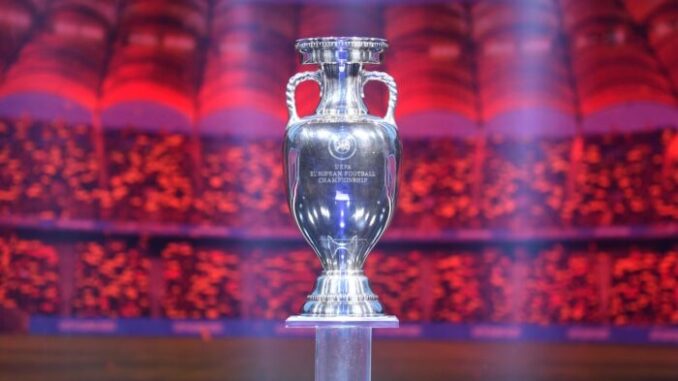
UEFA Euro 2024 was the most recent UEFA European Football Championship, which was held in Germany from June 14 to July 14, 2024. This was the 17th edition of the UEFA European Football Championship, the quadrennial international football championship of Europe organized by the Union of European Football Associations (UEFA).
There were 24 teams that qualified for the tournament and they have been divided into six groups. The opening match will be played on June 14, 2024, between Germany and Scotland at the Munich Football Arena in Munich. The final match was played on July 14, 2024, at the Olympiastadion in Berlin between Spain and England, Spain won 2-1.
Facts about the UEFA European Football Championship
- This is the 17th edition of the UEFA European Championship, with the first one being held in 1960.
- Germany has participated in the most tournaments (14), while they, along with Spain, hold the record for most titles won (3 each).
- A total of 10 countries have lifted the trophy, with the Soviet Union (as Russia) winning the inaugural edition in 1960.
- Four nations (Spain, Germany, Italy, France) have won the UEFA European Football Championship more than once.
- Only 19 clubs have ever reached the final without winning it!
- This is the first tournament with 24 participating teams.
- The total prize money for the teams remains the same as Euro 2020 at €331 million.
- Sustainability: Interestingly, the focus is on sustainability with a €32 million investment in an environmental, social, and governance (ESG) strategy.
- Unique Champions: Denmark (1992) and Greece (2004) are the only two countries to win the Euros as underdogs, surprising the football world with their victories.
- Golden Boot History: Michel Platini holds the record for most goals scored in a single tournament (9) achieved in Euro 1984. Cristiano Ronaldo is the all-time leading scorer in the Euros with 14 goals (as of June 10, 2024).
- Home Advantage: Interestingly, only three times has the host nation failed to progress beyond the group stage (Belgium in 2000, Austria & Switzerland in 2008).
- Mascot Menagerie: Every tournament has a mascot, with the upcoming Euro 2024 featuring Albärt, a lovable owl. The first mascot was Pinocchio in 1980!
- Dramatic Decisions: Penalty shootouts have decided the outcome of several Euro finals, including the most recent one in 2020 (Italy vs England).
- Young Guns: The youngest player ever to appear in the Euros is Benny Wohrle of the Netherlands, who played at 17 years and 287 days old in 1980.
- Goals Galore: The highest scoring UEFA European Football Championship was Euro 2004 in Portugal, with an average of 2.78 goals per game.
- Comeback Kings: Greece famously came back from a 2-1 loss in their opening game of the tournament against Portugal. In the Euro 2004 final Greece won 1-0 – this is considered one of the greatest comebacks in tournament history.
- Fanatic Fans: The official Euro 2024 website allows fans to personalize their experience and even vote for their favorite player of the tournament.
- Economic Boost: Hosting the UEFA European Football Championship brings a significant economic boost to the host nation. Euro 2016 in France generated an estimated €1.6 billion in revenue.
- Unsung Heroes: Not all heroes wear capes! Goalkeepers have played a crucial role in Euro victories, with legends like Iker Casillas (Spain, 2008 & 2012) and Edwin van der Sar (Netherlands, runner-up 2008) making phenomenal saves.
- International Stage Launchpad: The Euros have been a platform for young talents to break out. Players like Cristiano Ronaldo (Portugal, 2004) and Kylian Mbappé (France, 2018) showcased their skills on the big stage, launching them into superstardom.
- Fashion on the Field: While the focus is on football, kits and boots also garner attention. Euro 1984 saw Denmark’s iconic Hummel kit with its diagonal stripes, while Euro 2020’s bold and colorful designs were a hit.
- Managerial Masterminds: Great managers are crucial for success. Germany’s Joachim Löw (2008 and 2012) and Spain’s Vicente del Bosque (2008 and 2012) are examples of managers who led their teams to multiple Euro titles.
- Underdog Victories: The Euros have witnessed inspiring underdog stories. Iceland’s surprise run to the quarter-finals in 2016, defeating England along the way, captured hearts globally.
- Off-the-Field Drama: The UEFA European Football Championship aren’t just about football. Euro 2012 in Poland and Ukraine faced criticism for stadium construction delays and concerns about human rights.
- Technological Advancements: Technology has impacted the Euros. Goal-line technology was introduced in Euro 2016, ensuring controversial calls were minimized.
- Euro Anthems: Every tournament has its own official anthem, creating a unique atmosphere and leaving a lasting impression. The catchy tunes often become synonymous with the Euros.
- The Road to the Euros: Qualifying matches for the Euros provide high stakes drama as teams fight for their spot in the final tournament.
- Legacy of the Euros: The UEFA European Football Championship leave a lasting legacy on the host nation. Infrastructure development, increased interest in football, and a sense of national pride are some of the long-term impacts.
What’s your favourite UEFA European Football Championship fact?
Check out our facts about the Champions League here.