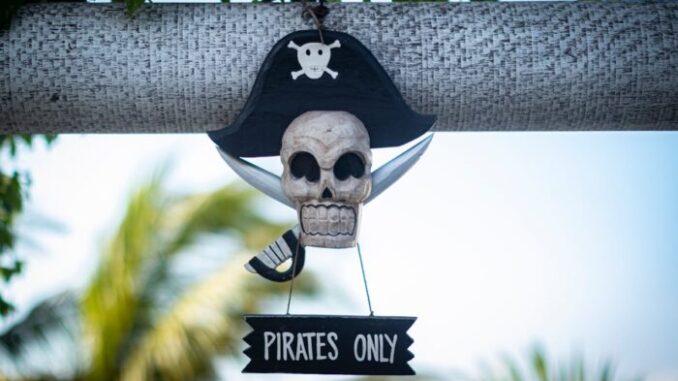
Pirates have captured the imagination of people for centuries, inspiring countless stories, movies, and cultural phenomena. From historical figures to fictional characters, the world of piracy is rich with fascinating facts and intriguing myths. This list of facts about pirates compiles a diverse array of information about pirates, covering historical truths, popular misconceptions, and their impact on modern entertainment and culture. Whether you’re a history buff, a movie enthusiast, or simply curious about the swashbuckling world of buccaneers, these facts offer a comprehensive look at the multifaceted realm of piracy.
Here are 30+ facts about pirates
- The Golden Age of Piracy lasted from about 1650 to 1720.
- Blackbeard, whose real name was Edward Teach, was one of the most infamous pirates in history.
- Pirates often used flags called Jolly Rogers to intimidate their targets.
- “Walking the plank” is largely a myth popularized by fiction.
- Many pirate ships operated as democracies, with the crew voting on major decisions.
- Pirates rarely buried their treasure; this is mostly a literary invention.
- The term “buccaneer” originally referred to hunters on Hispaniola who smoked meat on wooden frames called “boucans.”
- Female pirates like Anne Bonny and Mary Read disguised themselves as men to join pirate crews.
- Pirates often targeted merchant ships rather than other naval vessels.
- The phrase “Arrr!” was popularized by actor Robert Newton in the 1950 Disney film “Treasure Island.”
- Many pirates were former sailors who turned to piracy due to poor working conditions in navies and merchant fleets.
- The Caribbean was a popular pirate haven due to its many islands and shipping routes.
- Pirate ships were often faster and more maneuverable than merchant or naval vessels.
- Some pirates, like Henry Morgan, were officially sanctioned by governments as privateers.
- The “Pirates of the Caribbean” film franchise, starring Johnny Depp, has grossed over $4.5 billion worldwide.
- In folklore, pirates often had parrots as pets, but this was rare in reality.
- The pirate “code” or articles of agreement varied from ship to ship but often included rules for dividing plunder.
- Eye patches might have been used to keep one eye adjusted to darkness for below-deck fighting.
- The Barbary pirates of North Africa operated for centuries, even fighting wars with the United States in the early 1800s.
- Robert Louis Stevenson’s novel “Treasure Island” greatly influenced pirate stereotypes in popular culture.
- Some pirate captains, like Bartholomew Roberts, were known for their sobriety and strict rules.
- The term “scurvy dog” refers to the vitamin C deficiency common among sailors.
- Modern-day piracy still exists, particularly in areas like the coast of Somalia.
- The 1995 film “Cutthroat Island” was a notorious box office flop that nearly killed the pirate movie genre.
- Pirate radio stations, while not violent, took their name from the concept of broadcasting without legal permission.
- The Pirate Bay, a controversial file-sharing website, uses pirate imagery in its branding.
- Some historians argue that pirate societies were early examples of egalitarian democracy.
- The “Pirates of Penzance” is a comic opera by Gilbert and Sullivan that parodies pirate stereotypes.
- In the anime “One Piece,” the main character Monkey D. Luffy aspires to become the Pirate King.
- The video game series “Assassin’s Creed IV: Black Flag” allows players to live as a pirate in the Caribbean.
- The Goonies, a popular 1985 film, features a hunt for pirate treasure.
- September 19th is celebrated as “International Talk Like a Pirate Day.”
In conclusion, pirates continue to captivate our collective imagination, bridging the gap between historical reality and romanticized fiction. Their influence extends far beyond their historical era, shaping literature, cinema, and popular culture in countless ways. While the golden age of piracy may have ended centuries ago, the allure of these seafaring rogues remains as strong as ever, inspiring new stories, games, and cultural phenomena. As we separate fact from fiction, we gain a deeper appreciation for the complex world of piracy and its lasting impact on our cultural landscape.
We have a serious of posts about facts – random and wonderful things included.