Less than 24 hours after showing a club legend the door, Manchester United finally got their man—five years too late and under a different job title.
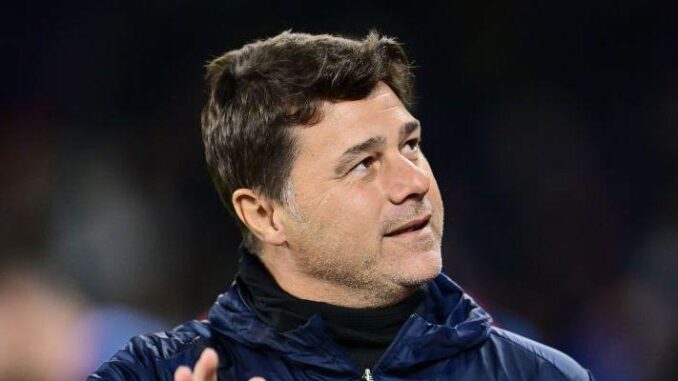
Mauricio Pochettino has been appointed on a contract running until the summer of 2029, tasked with dragging a listing giant out of the Premier League relegation zone. Crucially, however, the Argentine arrives at Carrington not as the all-powerful manager in the mould of Sir Alex Ferguson, nor even as a traditional European boss, but strictly as men’s first-team head coach.
On paper, that distinction is meant to represent modern footballing structure: a streamlined hierarchy where recruitment, strategy, and long-term vision sit above the dugout. In practice at Old Trafford right now, it looks less like a sleek sporting model and more like an insulation policy for an executive team that has overseen the club’s worst domestic start in 40 years.
The Undignified Exit of a Club Legend
To understand the cynicism greeting Pochettino’s arrival, one only has to look at how United handled the final days of Michael Carrick.
Just six months ago, Carrick was hailed as the steady hand who rescued the 2025/26 campaign—winning 12 of his 17 interim matches after Ruben Amorim’s departure to secure a third-place finish and Champions League football. Rewarded with a permanent deal in May, he was handed a squad reshaped by a chaotic summer window. When results cratered—leaving United 18th with just one win from their opening 10 league games—Carrick was inevitably going to carry the can.
Yet it was the manner of his exit that left a sour taste. Rather than affording a five-time Premier League winner a clean, dignified farewell, the club’s hierarchy spent the week conducting very public diplomacy in Monaco and briefing on replacements while Carrick remained twisting in the wind. Sacking him on Thursday only to unveil Pochettino—bought out of his U.S. Soccer contract for roughly £7.4 million—on Friday morning reinforced a familiar, ruthless reality: at modern Manchester United, sentiment is reserved exclusively for club statements, never for the people who built its history.
What Exactly Are Wilcox and Berrada Doing?
Which brings us to the fourth floor at Old Trafford—and the increasingly urgent question of what CEO Omar Berrada and Director of Football Jason Wilcox are actually achieving.
When INEOS took control of football operations, supporters were promised “best-in-class” operators who would replace Glazer-era impulsiveness with disciplined, data-driven planning. Instead, the summer of 2026 exposed a convoluted decision-making machine. Reports of a bloated sign-off process—requiring alignment across Wilcox, Berrada, recruitment chief Christopher Vivell, negotiator Matt Hargreaves, Sir Jim Ratcliffe, and the Glazers—help explain why top midfield target Elliot Anderson slipped away to Manchester City while United settled for £150 million worth of compromises in Andrey Santos, Carlos Baleba, and Youri Tielemans.
Even worse is the growing perception that Berrada and Wilcox are losing their grip on the wheel. If reports are to be believed that the Glazer family—alarmed by the financial catastrophe of a relegation battle—overruled the pair’s preference for Eddie Howe to force through Pochettino’s appointment, then INEOS’s grand sporting structure has already suffered a fatal credibility blow. Paying £7.4m compensation for a coach who could have been approached free of charge months ago is not agile, long-term strategy; it is panic disguised as a press release.
The Captain’s Stand-Off
Nowhere is the dysfunction felt more acutely than in the dressing room, and specifically in the contract impasse with club captain Bruno Fernandes.
Having rejected a second contract offer from the club, Fernandes finds himself at a crossroads. While salary and contract length remain sticking points, the Portuguese midfielder’s frustration runs deeper than numbers on a page. Having dragged United through barren seasons—sweeping both the FWA and PFA Player of the Year awards only last term—Fernandes has watched a squad crying out for elite, immediate reinforcement stagnate while rival clubs strengthened decisively.
With January fast approaching—the point at which foreign clubs can legally open pre-contract talks unless United trigger their 12-month extension—retaining Fernandes will be Pochettino’s first major diplomatic test. The two nearly united at Tottenham in 2019; Pochettino must now convince a disillusioned 32-year-old that the project at Old Trafford isn’t already broken beyond repair.
The Worst of Both Worlds
For years, Manchester United fans believed the arrival of a minority partner with genuine sporting ambition would dilute the toxicity of the Glazer ownership. Instead, the marriage of INEOS and the Glazers has produced the worst of both worlds: the penny-pinching, bureaucratic paralysis of corporate austerity paired with the reactive, headline-chasing panic of absentee landlords protecting an asset’s valuation.
Mauricio Pochettino walks into Carrington next week with a baptism of fire at Anfield on November 22 waiting for him. He is an elite tactician and a proven developer of talent. Yet as a mere “head coach” operating beneath an embattled executive layer and a fractured ownership model, one has to wonder: has Pochettino been hired to fix Manchester United, or simply to shield the people who broke it?
Leave a Reply