As a society, I think it’s fair to say that when some new and exciting technology is released upon us, we grasp it with open arms and never look back in anger. I remember the first time I saw a mobile phone, it was massive, clunky, almost the size of a small bungalow and you practically needed a rucksack to carry it around. But I was mesmerised with it, the ability to make a telephone call from anywhere… Wow…. I also remember the first time I saw a film on DVD. The image was so clear, it was if they were in the same room. The sound so crisp, you weren’t sure if it was on your TV or outside. Being a quite big movie fan in my youth, I looked out for any improvements in sound and vision; anything to improve my viewing experience. Except, that is, the launch of 3D.
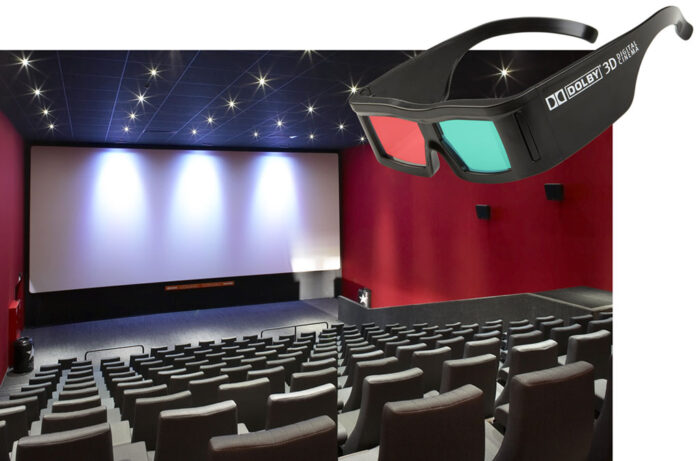
Something about the thought of watching something in 3D has always made me feel uneasy. Do I really want to see King Kong take a swing at a passing aeroplane just passed my head? Is it really necessary to see the DeLorean from Back To The Future escape the screen in a hail of flames and winged doors? When Darth Vader breaks the news of his paternity test to Luke in the Empire Strikes Back, do I really want see his pain and anguish any nearer than it has to be? The answer to all these is a resounding HELL NO!
Yet a lot of people got excited, to the point of uncontrollable giddiness, when news of true 3D films was released. James Cameron, the mega-director slash movie magician, brought us his first masterpiece since Titanic when he brought us Avatar. The film was hailed as a unique, first of its kind, leap into the frontier of 3D. This would not only revolutionise the way we enjoy our films, but it would see us reject our prehistoric 2D ways. It would also solve the financial meltdown, eradicate world hunger and do your ironing. Well, obviously not the last three but that is the near level of hysteria surrounding the film. That was until people saw it.
Now you may think that James Cameron was wrong about 3D, but actually he was right. It is a massive leap in cinematography. The visuals do offer a different viewing experience to normal, everyday 2D. The problem is that it’s just a bit crap. A bit of an anticlimax when you actually sit down and watch it. Yeah, it does look a touch 3D, but the stupid glasses are annoying. And let’s face it, with Avatar, James Cameron chased the 3D so much that he kind of forgot about one fundamental part of a film… The plot.
But still, after the release of Avatar, it seemed like you couldn’t trip over a film without it being in 3D. Pirates of the Caribbean 3D, Transformers 3D, ‘Every kids film imaginable’ 3D. What’s next, Sex in the City 3D???? Let’s hope not. And it’s not. Very likely too as the cinema going public is soon becoming tired of this fad of film-making and demanding that films be optimised in good old, crappy flat visioned 2D. I mean, if it ain’t broke don’t fix it, right?
So how will 3Ds legacy be determined when all is said and done? Will it be heralded as a break through of epic proportions, a life defining technological breakthrough for the ages? I doubt it very much. Will it be known as a flop of an equally monstrous scope? Like HD-DVD, Virtual Reality or Solar Power (guffaw)? No I don’t think it will. 3D will sit somewhere in the middle of this list. It wowed us with its possibilities, it shocked us with its mediocrity, then it vanished quietly into the night, never to be seen from again. Well there is always hope…
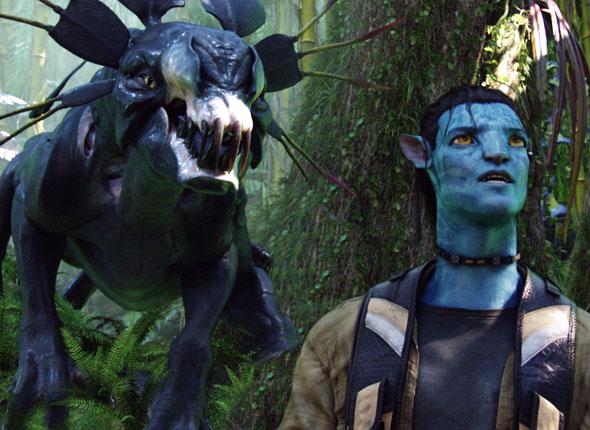
I think you summed this all up best when you pointed out the lack of a plot in ‘Avatar.’ Sad but true teehee.