A slow or blocked drain does not automatically mean that the pipe itself is damaged. In many cases, restricted flow is caused by grease, food waste, scale, hair or other material building up inside the pipe. Problems with blocked drains Redhill homeowners experience can often be resolved through professional cleaning, but repeated blockages or unexplained backing up may point to a deeper fault. DrainBoss works with both drainage clearance and repair, using methods such as high-pressure water jetting, CCTV surveys and drain relining where appropriate.
The difficulty is that very different problems can produce similar symptoms. A drain may run slowly because its internal diameter has been reduced by deposits, but the same symptom can also appear where a pipe has become misaligned, deformed or damaged. Clearing the obstruction may restore the flow, yet if the underlying pipework is defective, the problem is likely to return.
Understanding the difference between a drain that needs cleaning and one that needs structural repair can help avoid repeated temporary fixes and unnecessary work. The key is to identify what is actually restricting the system before deciding how it should be treated.
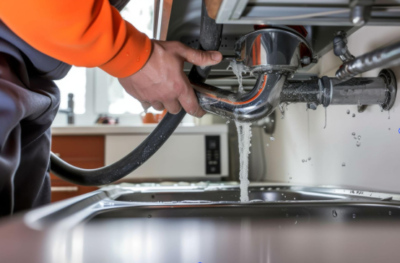
Drain Cleaning and Drain Repair Solve Different Problems
Drain cleaning deals primarily with material inside the pipe. The aim is to remove whatever is restricting the normal movement of wastewater and restore the internal diameter of the drain as far as possible.
Depending on the type and location of the obstruction, this may involve mechanical rodding or high-pressure water jetting. Grease, food residue, scale, silt, hair and other accumulated debris can all reduce flow without there being anything structurally wrong with the pipe itself.
When the pipe remains sound, cleaning can be all that is required. Once the obstruction is removed, water should move through the system normally again.
Drain repair addresses a different problem. It becomes relevant when the pipe itself has deteriorated, moved or suffered physical damage. Cracks, fractures, displaced joints, deformation and partial collapse cannot be removed by cleaning because they are faults in the structure of the drainage system.
The distinction is simple in principle: cleaning removes material from a pipe, while repair restores or replaces a damaged section of pipework. In practice, however, the symptoms do not always make it obvious which one is needed.
The Same Symptom Can Have Very Different Causes
Slow drainage is a good example. A kitchen sink may empty slowly because fat and food deposits have narrowed the pipe. The same slow flow can also occur further down the system if a joint has shifted or part of the pipe has become deformed.
Bad smells can be equally misleading. They may come from organic material trapped inside the drainage system, but they can also be associated with standing wastewater caused by poor alignment or restricted flow.
Even a blockage that has been successfully cleared does not necessarily tell you why it developed. If the pipe is structurally sound, the obstruction may have been an isolated maintenance issue. If there is a displaced joint or damaged section further along the run, the blockage may simply have formed around an existing defect.
This is why choosing between cleaning and repair based only on the visible symptom can lead to the wrong conclusion. The cause matters more than the symptom itself.
Signs That Cleaning May Be Enough
There are situations where the evidence points more towards an obstruction or build-up than structural damage. None of these signs provides a diagnosis on its own, but together they can help indicate that cleaning may be the proportionate first response.
The issue appears to affect a limited area rather than several connected drains.
There is an obvious possible source of build-up, such as grease, food residue, hair, soap deposits, scale or silt.
Normal flow returns fully after the obstruction has been professionally removed.
The same problem does not return soon after cleaning.
There are no known signs of cracking, displacement, collapse or recurring root ingress.
The important point is what happens after the drain has been cleared. If the system continues to work normally, there may be no reason to consider structural repair.
Signs the Pipe May Need Repair Rather Than Another Clean
A different pattern emerges when problems keep returning or when there is evidence that the pipe itself is no longer in good condition.
The same section repeatedly blocks after being properly cleared.
Tree roots continue to enter the same part of the system.
CCTV inspection shows cracks, fractures or displaced joints.
Water remains standing in a section of pipe because of deformation or poor alignment.
Several connected drains are affected by the same underlying restriction.
A section of pipe has partially collapsed or suffered significant structural deterioration.
Repeated cleaning can still restore flow in some of these situations, but it may only deal with the immediate obstruction. If the defect that caused the build-up remains in place, debris can begin accumulating again.
That does not mean every recurring blockage requires major repair. It does mean there is value in understanding why the problem is recurring before paying for the same intervention again.
Why a Drain Can Keep Blocking After It Has Been Cleaned
A properly cleaned drain should have the obstruction removed, but cleaning cannot correct the shape, alignment or structural condition of the pipe.
Imagine a joint that has shifted slightly and created an uneven edge inside the drainage run. Waste may still pass through, but the irregular surface can catch material that would normally continue downstream. Over time, a new obstruction forms around the same point.
Root ingress creates a similar problem. Roots can enter through a crack or defective joint and interfere with flow. Removing the roots may clear the drain, but if the opening remains, new growth can eventually enter through the same defect.
Deformation can also leave a low point where water and sediment collect. Cleaning may remove the accumulated material, yet the shape of the pipe still encourages future deposits.
In these cases, the repeated blockage is not the original problem. It is the consequence of a physical defect elsewhere in the system.
How Professionals Decide Between Cleaning and Repair
The aim should be to use the least disruptive method that actually deals with the cause. A sensible assessment normally follows a clear sequence.
Review the symptoms and history. How long has the problem existed, has it happened before and which parts of the property are affected?
Restore flow where necessary. If the drain is heavily obstructed, it may need to be cleared before its condition can be assessed properly.
Inspect the relevant pipework. Where a structural issue is suspected, CCTV inspection can provide a direct view inside accessible sections of the drainage system.
Identify the cause rather than the symptom. Deposits, root ingress, displaced joints and collapse require different responses even if they initially produce similar signs.
Choose the most proportionate solution. The condition, location, accessibility and extent of the problem all influence whether cleaning, local repair, relining or replacement is appropriate.
CCTV inspection is particularly useful when a problem repeatedly returns or when there is no obvious explanation for restricted flow. It can show whether the pipe is simply dirty or whether the obstruction is associated with a structural defect.
The camera does not fix anything itself. Its value lies in reducing guesswork before repair work is considered.
Cleaning, Patch Repair, Relining or Excavation?
Not every drainage problem needs the same level of intervention. The condition of the pipe and the extent of the defect determine which options are realistic.
|
Problem found |
Typical approach |
What the method addresses |
|
Grease, scale, silt or other internal build-up |
Cleaning or high-pressure water jetting |
Removes material restricting flow |
|
Localised obstruction |
Rodding or appropriate cleaning |
Clears a blockage from the affected section |
|
Small localised structural defect |
Patch repair, where suitable |
Repairs a specific damaged area |
|
Longer damaged section suitable for trenchless repair |
Drain relining |
Forms a new lining within the existing pipe |
|
Severe collapse or damage unsuitable for relining |
Excavation and replacement |
Removes and replaces structurally failed pipework |
The table provides a useful guide, but it is not a substitute for inspection. Access, pipe material, diameter, location and the severity of deterioration can all change the appropriate response.
For example, two pipes with similar cracks may not be repaired in the same way if one is easily accessible while the other runs beneath a finished floor or driveway.
Why Repair Does Not Always Mean Digging Up the Garden
For many homeowners, the words “drain repair” immediately suggest excavation, disturbed paving and trenches through the garden. Sometimes excavation is necessary, particularly where a pipe has collapsed badly or cannot be repaired internally.
It is no longer the only option.
Patch lining can be used in suitable circumstances to repair a relatively small damaged section from inside the existing pipe. Instead of replacing the full run, the repair is concentrated around the affected area.
Full drain relining follows the same broad principle on a longer section. A new lining is installed inside the existing pipe, creating a renewed internal surface without exposing the entire drainage run from above.
These trenchless methods can reduce disruption significantly, but they are not appropriate for every defect. A severely collapsed pipe, major deformation or a section that has lost its structural shape may still require excavation.
The decision should therefore start with pipe condition, not with a preference for a particular repair technique.
When Waiting Can Turn Into a Bigger Repair
Some drainage issues remain relatively stable for a time. Others become progressively harder to deal with.
A small accumulation of deposits may simply continue restricting flow until the pipe eventually blocks. A damaged joint can collect increasing amounts of debris. Roots that have found their way through a defect can grow further into the drainage run. A structurally weakened section may deteriorate as the surrounding ground moves or as the pipe continues to carry wastewater.
This does not mean that every slow drain is on the verge of collapse. In many homes, the cause will still be a straightforward blockage that can be cleaned without further work.
The reason persistent symptoms deserve attention is that delay removes information. If a drain is cleared repeatedly without establishing why the same problem keeps appearing, the underlying defect may remain unnoticed until the repair becomes more complicated.
A Simple Cleaning or Repair Checklist
Homeowners do not need to diagnose underground drainage themselves, but a few questions can help determine whether the next step should be straightforward cleaning or a closer investigation.
Has the problem happened before? A first blockage and a recurring blockage should not automatically be treated in the same way.
Is there an obvious source of build-up? Grease, food residue, hair, scale and similar material make an obstruction more likely.
Did cleaning restore normal flow completely? If the drainage remains slow after the blockage has been removed, further investigation may be justified.
Did the problem return quickly? Frequent recurrence can suggest that something inside the pipe is encouraging material to collect.
Is there evidence of physical damage? Cracks, displaced joints, deformation, root entry and collapse move the issue from cleaning towards repair.
What is the least disruptive method that solves the actual cause? A proportionate solution might be cleaning, localised repair, relining or, where necessary, excavation.
The central question is not whether cleaning is better than repair. Each has a different purpose. Good drainage work begins by establishing which problem is actually present.
Conclusion
A drain that runs slowly or blocks does not automatically need repairing, just as clearing an obstruction does not prove that the pipe underneath is healthy. Cleaning is appropriate when material inside structurally sound pipework is restricting flow. Repair becomes relevant when the condition of the pipe itself is responsible for the problem. Recognising that difference can prevent both unnecessary work and repeated short-term fixes.
For property owners who need professional drainage assessment, DrainBoss provides drain unblocking, CCTV surveys, high-pressure water jetting, drain repair and relining for domestic and commercial properties. The family-run company is Trading Standards Approved, CHAS accredited and works across the South and South East of England, using modern diagnostic and repair methods to identify the cause of drainage problems before deciding how they should be treated.
Leave a Reply