Thanks to a whole load of confusion on my part (so what else is new?), Back in Time is a week late. I realise everyone will have been waiting impatiently for seven days; some may even have started sobbing quietly over their keyboards by this point. I can only apologise deeply for the worry and anger, and move on swiftly to your century-old news update.
So, April 1912. What happened in April 1912? Well, the number of US senators went up from 92 to 96. Bram Stoker, the novelist famous for writing Dracula, died, aged 54. The first issue of Pravda was published in Russia. A lot of very interesting stuff, but nothing particularly mind-blowing. I guess it’s going to be a short one this month, then…
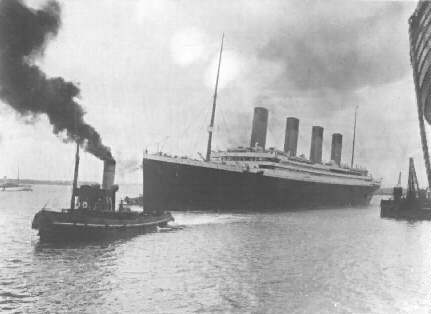
…Wait, what’s that? The Titanic? The Titanic sunk in April 1912? Oh no, that can’t be right. Surely that occasion would have been marked, with TV dramas, documentaries, real-time Twitter accounts, 3D film re-releases, and blanket coverage from a modern-day media obsessed with the sensationalisation of tragedy, and I didn’t see…oh no, wait. Yes. I remember now. I believe it was about a week into April that I made the strict decision to block out all mention of the Titanic in the belief that my head may be on the verge of exploding. I mean, trust me, I’m no stranger to Titanic obsessions-I saw the James Cameron film seven times at the cinema after all-but I don’t think I’m being unfair in saying that it all got a bit much. Here in the UK, media coverage of the centenary was intense, covering all aspects of the ship and the tragedy which befell it…and while I personally did find it rather tiresome by the end, it did interest me in one way: just why has the Titanic captured the public imagination so strongly over the past century? There have been bigger maritime tragedies, both before and since, and while it was a particularly luxurious ship, with a number of famous passengers onboard, this doesn’t explain why the story of the Titanic resonated over so many decades.
The answer, in my opinion, is best summed up by this sentence on the BBC website: ‘For many, the tragic fate that befell Titanic would come to mark the passing of the opulence of the Edwardian era and foreshadowed the global tragedy of World War One.’ The 20th century was marked to such an extent by the two world wars, that it’s easy to forget that there was a time of hope and peace before 1914. A time when the world still looked towards a happy future, with no sense of the global devastation that was about to befall them. The Titanic truly was an incredible symbol of its time, signifying the moment when industry and invention turned against humankind. The leading figures at White Star Line truly did believe that they were building an unsinkable ship, ignorant to the fact that machinery has no answer for nature…while in the years to come, mankind would show just how much damage can be inflicted when technological advancements are used as a tool for power.
Some news stories are huge for a time, before slipping out of public consciousness entirely within a week, a month, or maybe even a year. It’s entirely possible that, had World War I not followed so closely in its footsteps, the sinking of the Titanic would have been another of these stories. As it turned out though, the Titanic was the first major tragedy in a century of death and destruction. As such, it took on a sense of major importance, its stories becoming modern folklore…while I may therefore mock the media obsession with the anniversary, I can’t deny that the Titanic, in the context of its time, deserves to be remembered.
