With spring coming, many people are now starting to revamp their garden spaces, especially as the roadmap out of lockdown will see us socialising more outdoors over the coming months. And many of us are increasingly desiring low-maintenance options, such as introducing artificial grass.
The artificial grass sample requests at Flooring Superstore’s sister brand Grass Direct have increased 289% year on year, and sales have increased by just under 50% year on year (based on stats taken from Feb 2020 compared to Feb 2021).
How to care for artificial grass
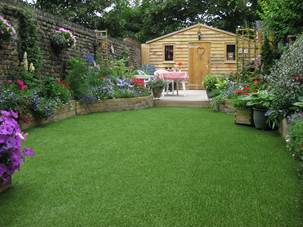
DO check your grass every week and pick up any loose dirt or debris
Any debris like dead leaves or excess mud should be easily visible. Use a rubber rake or brush these away with a soft-headed brush, so that they don’t become intertwined with the grass blades or play havoc with your drainage system
DON’T forget to use a sand infill
If your blades are looking a little flat, simply brush them back and top them up with a layer of infill
DO invest in a specialist cleaning treatment
Apply as per the manufacturer’s instructions and rinse down after use
DON’T rub the grass or use excessive force whilst cleaning
Excess force can cause unintentional damage – to get rid of a liquid stain in your grass, use a damp cloth or paper towel and blot the stain directly before treating with your cleaning agent.
DO make sure your grass has been fitted in the correct way to allow the turf to properly drain
Blocked systems cause water to lie stagnant. Testing your drainage before and after installing will avoid the issue
DON’T forget to apply weed killer to the ground before you lay your grass
If you do have issues with weeds, gently pull out any surface weeds you can see, then rinse down with a power washer before applying a weed killer treatment. Remember to use a week membrane, during installation, to keep the weeds at bay.
DO repair any seams, tears, or holes as soon as you spot them
To keep your artificial grass looking its best, always be sure to clean up debris that shouldn’t be there. This will prevent any avoidable damage and keep your grass looking brand new; prolonging the lifespan
DON’T leave snow and ice on artificial grass
Salt leftover from ice and snow can form a layer over the grass, preventing the turf from draining properly. To remove, use a plastic snow shovel to remove as much snow as possible from the turf. Don’t use a metal snow shovel or git, as this can damage the grass.
Jessica Fox at Grass Direct commented:
“Artificial grass is simple and easy to clean, in fact, it’s less time consuming and laborious than caring for real grass. As long as you maintain your grass regularly, ensuring you clean up after spills, pets and are treating weeds prior to installing your fake grass, there will be no problems with its appearance, texture or smell.
“Samples have more than doubled from January to Feb 21 as we start to approach grass season, and we’ve had a particular peak in the search term ‘5m wide artificial grass’, which is popular as it enables a lot of customers to avoid a join. We have 5m wide artificial grass available in the following ranges: Oasis; Orlando; Porto; Madrid; Hollywood; Barcelona; Miami; Lucerne; Kalahari; Lisbon; Monaco; and Milan”.
Artificial grass offers a wide range of perks, including being long-lasting, low-maintenance, and looking great all year round, as well as being pet and child-friendly. However, there are a few things you should consider before choosing your artificial grass to help you make the right choice.
These considerations include:
Budget
With any project, you should always start with a budget. Measure the area – this will let you know the amount of grass needed so you can start your search for your perfect. You will also need to consider additional material you may need for your installation. Hardcore, sand, and limestone chippings if you’ve got pets to neutralise odours. Making sure you know what you will need prior to a purchase will prevent any surprises further down the line.
Samples
Instead of jumping into buying the first artificial grass you like the look of, we highly recommend you order samples before you buy. This will allow you to compare colours, length, softness and quality, so you can get a true representation of the grass.
Pile type
Pile type, also known as yarn shapes, play a big part in the overall appearance. C-shaped allows the grass to bounce back after experiencing foot traffic, diamond shaped yarns give a smart and uniformed ‘freshly cut’ look, L-shape are the softest to touch and give a natural finish, and multi shape combines four yarn shapes to produce the most realistic looking grass.
Pile height
Pile height refers to the total length of your artificial grass from backing to the tip of the blades, and plays a big role in the overall look and feel of your artificial grass. If you’re wanting a neat and tidy finish with that fresh-cut look, then a shorter grass (16-27mm) is the most suited option. It is also well suited to families with pets and children and those keen sports players. For a fuller, more luxurious look, we would recommend opting for a pile height of 30-37mm.
Pile density
Pile density refers to the number of fibres that are stitched to the artificial grass backing and how close together they are packed, so it affects the overall finish of your lawn. Medium density piles are usually somewhere between 15000-18000 stitches per square metre. This type of pile density is great for your typical demands such as children, pets, and families who spend a lot of time in their garden.
Colour
One major benefit of artificial grass is how appealing it is on the eye – and, sometimes, this appeal comes from the colour. Placing your samples in the region of where you are planning to lay your artificial grass is a great way of getting a realistic idea of the shade before buying. Different times of day will affect the look of your grass as the sun moves and the light reflects at different angles.
Sub-bases
Artificial grass is extremely versatile due to its ability to be fit virtually anywhere. However, due to this versatility and being suitable for a range of surfaces, you’ll need to know what goes underneath your artificial grass as it can differ depending on surface:
When replacing lawn with artificial grass, sharp sand with a weed membrane is the perfect pairing
When laying your artificial grass onto a harder surface such as concrete or decking, underlay is recommended to give that extra cushion underfoot and hide any subfloor imperfections.
Installation
Installing your artificial grass yourself is a great way of saving money. If you choose to do so yourself, remember that pile direction plays an important role in your grass having that realistic, natural look – To achieve the best visually appealing results, face the blades of grass in the direction of your vantage point. Align your rolls of lawn, laying them with the pile leaning in the same direction across each roll for consistency and to make joins less noticeable.
For those who aren’t so confident in a DIY fitting, you can hire a local grass fitter to help you with your installation. Spend some time looking around for the best price and comparing quotes, as well as looking out for those with positive reviews.
