For thousands of years, silk in fashion has been an unwavering pillar throughout the world. As the legend goes, it was Lady Hsi Ling Shih who was enjoying an afternoon in the palace gardens in Ancient China, when a silkworm cocoon fell into her cup of tea. She noticed how beautifully the light caught the strands that made up the cocoon. It is believed that she was inspired to develop the process still used today to cultivate silkworms: sericulture.

How Silk is Made
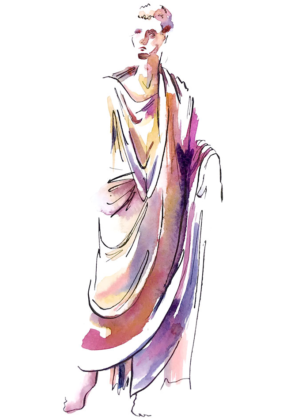
Since around 3,000 BC, silk has been known as the most lustrous natural textile there is, easily making anyone who wears it feel like royalty. In fact, emperors and kings throughout history, such as King Darius III of Persia and the Roman Emperor Caligula, have been memorialised in silk robes.
The production of silk starts with sericulture or the gathering of silkworms. It isn’t until silkworms prepare to metamorphosise into moths that the silk strands can be collected. The cocoon is made up of one long strand of silk, produced by the worm. When the cocoon is finished and the worm is inside, the cocoon is then boiled until the delicate strand of silk comes undone.
Those who raise silkworms know what a time consuming process silk production is. The silkworms are sensitive creatures. From the start, eggs must be incubated in a controlled environment until the worms hatch. Once hatched, the caterpillars keep a strict diet of mulberry leaves for nearly six weeks as they grow into adults.
When a silkworm starts to raise its head, sericulturists know the time is near for the caterpillar to start constructing its cocoon. The silkworm begins a process that can take over a week to complete, moving its body in a figure eight-like motion to produce the cocoon. The single strand of silk that makes up the cocoon is held together by sericin and can measure up to 100 metres long.
To collect the delicate thread of silk, the cocoons must be boiled to dissolve the sericin that gives the cocoon its shape. This is perhaps the most valuable step, as it must be done with care to safeguard the vitality of each individual thread. The threads are then wound on a reel, creating the spools of thread many of us are familiar with today.
Some sericin residue may still be found on the silk, but is eventually washed off with soap and water before the dyeing process can begin. Nobility throughout history have been known to don silk garments in the most luxurious golden tints, fit for those with the finest taste in fashion. For silk that is destined to be dyed, it is simply bathed in a bath of dye until it takes in the proper amount of colour, a process that can span days.
Once dyed, the silk fibres are spun onto a bobbin so that they can be woven. The weaving process is when silkmakers greet the fabric for the first time. The desired finish of the silk is dependent on the style of weave. From plain to satin, the principle is that two silk threads are strung together so that they hinge around each other and build up the structure of a single piece of fabric.
From there, a piece of silk may be printed on. Once the desired print is depicted on the silk, it goes through a final finishing process that gives it its characteristic sheen, while simultaneously treating it against creasing and fire. After a rather time consuming process from egg to finishing, silk is ready to be used.

History weaves a beautiful story outlining the highly sought-after fabric known as silk. First mesmerising society in Ancient China, it wasn’t long before silk held an alluring fascination throughout the globe. With the way this radiant fabric so beautifully drapes over the body, it’s no wonder that silk holds such a special place in our wardrobes and hearts.