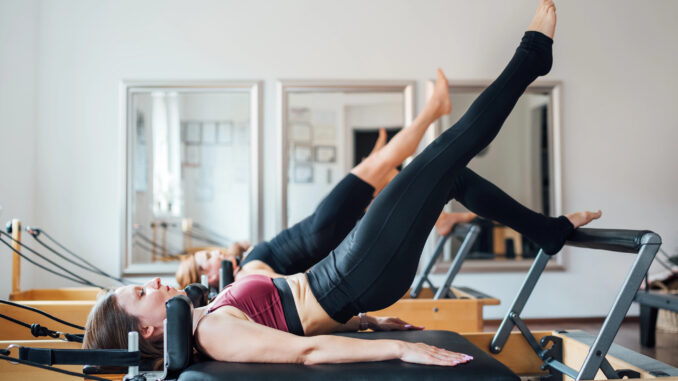
Reformer Pilates has a reputation problem.
Scroll social media and it looks like you need a perfectly curated outfit, specialist accessories and an encyclopaedic knowledge of studio etiquette just to book your first class. In reality, reformer Pilates is far more accessible than it appears — and most beginners need far less than they think.
If you’re curious about trying reformer Pilates, or you’ve just booked your first session, here’s what you actually need to get started… and what you can safely ignore. If you’re unfamiliar with common studio terminology, this guide to common Pilates terms can help you feel more confident before your first class.
First Things First: What Is Reformer Pilates?
Reformer Pilates is a form of Pilates performed on a reformer machine — a sliding carriage with springs, straps and pulleys that add resistance to movements.
It’s low-impact but challenging, focused on strength, control, mobility and alignment. Classes are typically held in studios, and most equipment is provided for you.
Which brings us to the big question.
What You Actually Need for Reformer Pilates
1. Grip Socks (This One Is Essential)
If there’s one item that’s genuinely non-negotiable, it’s Pilates grip socks.
Most studios require them for hygiene and safety reasons, and instructors will often turn you away without them. The non-slip soles help prevent sliding on the reformer carriage and footbar during exercises.
Crew, ankle or toe socks are all fine — the most important thing is grip.
2. Comfortable, Fitted Clothing
You don’t need a full matching set, but what you wear does matter.
What works best:
- Leggings or fitted shorts
- A snug top that won’t ride up
- Stretchy, breathable fabrics
What to avoid:
- Baggy joggers or loose tops
- Anything with zips, buckles or hard seams
- Slippery fabrics that move against the machine
Instructors need to see your alignment, and loose clothing can get caught in springs or straps.
3. A Water Bottle
Reformer Pilates may look calm, but it’s deceptively intense — especially for beginners. A water bottle is always worth bringing, even for shorter classes.
Most studios have water available, but having your own is easier.
4. An Open Mind (Seriously)
This sounds cheesy, but it matters.
Reformer Pilates is controlled and precise, and it can feel unfamiliar at first. Movements are often slow, targeted and very specific — and that’s where the results come from.
You don’t need flexibility, strength or experience. You just need a willingness to listen and take things at your own pace.
What You Don’t Need (Despite What Social Media Suggests)
Matching Sets and Studio “Looks”
Nice to have, not necessary. No one is judging your outfit — and if they are, that’s a them problem.
Gloves, Belts or Extra Accessories
Studios provide all required equipment. Anything else is optional and often unnecessary for beginners.
Prior Pilates Experience
Reformer classes are often beginner-friendly, and instructors regularly offer modifications.
To Be “Good” at It
Everyone shakes. Everyone struggles. That’s the point.
Optional Extras (Nice, But Not Essential)
Once you’ve done a few classes, you might decide to invest in:
- A second pair of grip socks
- Compression leggings for added support
- A small towel for longer or more intense sessions
But none of these are required to start.
Reformer Pilates at Home: What Changes?
If you’re doing reformer-style workouts at home (or considering a reformer machine), the basics remain the same:
- Grip socks
- Comfortable clothing
- A mat or stable surface
Home setups vary widely, but beginners are often better off starting in a studio before investing in equipment.
The Bottom Line
Reformer Pilates doesn’t require a lifestyle overhaul or a shopping spree. You don’t need the “perfect” body, wardrobe or routine — just a pair of grip socks, comfortable clothes and a willingness to try something new.
As with many wellness trends, the reality is far simpler (and more welcoming) than social media makes it look.
And once you’re in the studio? You’ll quickly realise that reformer Pilates is far more about how you move than what you wear.