From losing time to silent battery issues, watches often stop working without warning.
That’s because the warning signs, such as moisture creeping in or internal components gradually wearing down, are invisible to untrained eyes.
In many cases, what could have been a simple fix becomes a full repair job, particularly when problems like battery leaks or internal corrosion are involved.
Mark Conway of Michael Jones explained: “A lot of people wait until their watch stops completely before doing anything, but by that point, the damage has often already been done.
“Awareness, maintenance, and regular checks really are the difference between a quick fix and a much more costly repair, especially with watches that have sentimental value.”
DIY Battery Replacements Are Costing Owners Thousands
“Attempting to open a watch at home is one of the most common and expensive mistakes,” Mark warned.
“Without the right tools, it’s easy to scratch cases, damage seals, or introduce dust and moisture into the movement, issues that aren’t always immediately visible but can cause problems later.
“A particularly common issue is people trying to replace batteries themselves using makeshift tools. This can bend contacts, crack components, or leave the case improperly sealed.
“There’s also the risk of overcorrecting small issues, like trying to fix timekeeping by adjusting parts that don’t need touching, which can throw the entire mechanism out.
“It’s understandable that people want a quick fix, but watches are incredibly precise, and even a small slip can create a much bigger issue than the one you started with.”
When Your Watch Suddenly Loses Time, It’s Asking for Help
“In mechanical watches, there is an expected tolerance of time loss or gain each day,” shared Mark.
“Some watches can lose up to 35 seconds or gain 45 seconds per day. Most of the time, it comes down to the brand of the watch and its characteristics.
“This is normal and can be easily regulated. However, if there’s a sudden change, or the loss or gain starts to increase, then that’s a sign that something inside is wearing down.
“In mechanical watches, this can point to issues with lubrication. Oils inside the movement degrade over time, increasing friction and affecting accuracy long before the watch stops completely.
“Mechanical watches tend to have service intervals, where components and lubrication need renewing. This typically ranges from five to ten years but really depends on the brand. Think of it like servicing your car, even if there isn’t an issue today, staying on top of it will help increase longevity.
“Quartz watches, meanwhile, may signal battery depletion through inconsistent ticking.
“If you notice new time discrepancies, that’s your window to act before a minor service turns into a major repair.”
Watch Batteries Don’t Die Overnight, But Ignoring Them Can Cause Damage
“Most quartz watch batteries last between one and three years, but many owners wait until the watch stops entirely before replacing them,” revealed Mark.
“The risk? A depleted battery can leak, corroding internal components and turning a simple fix into a costly restoration job.
“I’d recommend proactive replacement. As soon as you notice a low battery indicator, like irregular ticking, or if you don’t think you’ll be wearing it for a long time, it would be wise to get the battery replaced.
“Battery leakage is one of the most preventable causes of serious damage we see.”
Moisture Is the Silent Killer of Watches
“Even ‘water-resistant’ watches aren’t immune to moisture damage over time,” Mark said.
“Just because a watch is water-resistant to 100m doesn’t mean it will withstand being in water as long as it isn’t 100m deep. Water resistance is based on pressure, not depth, so the force of water from a shower could exceed your watch’s rating, even if it isn’t 100m deep.
“The heat of the water can also affect the rubber seals of a watch, so it’s never recommended to wear a watch in a bath, jacuzzi, or steam room.
“Furthermore, seals and gaskets degrade, meaning everyday exposure, like washing hands or being caught in the rain, can allow moisture to seep in unnoticed.
“Water damage can cost hundreds, if not thousands, of pounds to repair if the damage is extensive.
“Vintage watches may even be impossible to repair, with parts no longer being made.”
“I’d recommend having the water resistance tested every two years, or when the battery is replaced for quartz watches, even if there is no sign of a leak. This is because the degradation of the seals is often invisible while the watch is assembled, but once they fail, a leak can occur at any time, and then it will be too late.”
3 Easy Ways You Can Prolong the Life of Your Watch
Safely remove batteries from watches you aren’t wearing
“If you have a watch you know you won’t be wearing for a long time, or if you are keeping it for sentimental reasons rather than wearing it, get the battery taken out,” said Mark.
“Over time, batteries expire and can leak within a watch, so avoid the cost of repairs by removing the battery pre-emptively.”
DON’T pull out the crown
“It is a false belief that by pulling out the crown of a quartz watch, you can stop the battery from running so it will last longer. This is actually the worst thing you can do,” said Mark.
“Pulling out the crown only stops the hands from moving, the rest of the movement is still working inside the case.
“By doing this, you won’t know when the battery has run out, so you won’t realise when to replace or remove the dead battery, preventing the leaking of corrosive substances within the movement.
“Furthermore, leaving the crown pulled out creates an entry point for dust to get into the movement and cause further problems.”
Change the date properly
“Don’t quick-change the date when the hands are set to midnight,” said Mark.
“Typically, watches have two mechanisms to change the date, one linked to the progression of the hands and another for manual quick-change.
“If both are engaged simultaneously, they can interfere with one another.
“With this in mind, it’s best to use the quick-change function with the hands set to six instead.”
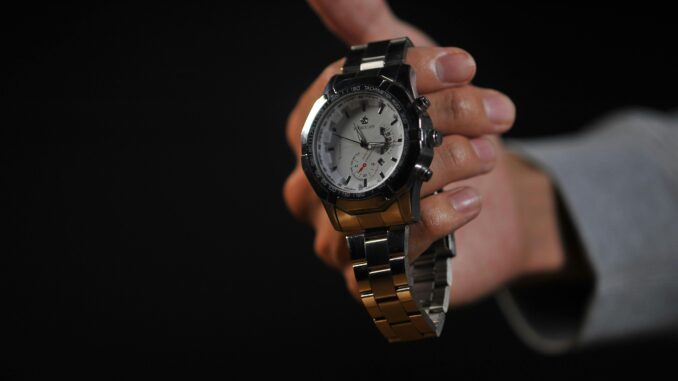
Photo by 致柔 廖: https://www.pexels.com/photo/elegant-men-s-watch-displayed-on-hand-29639117/
