The fall of the Berlin Wall was simply one of the most-important events in history. Suddenly, as if out of the blue, the enormous Soviet Union collapsed. The repressive GDR regime of East Germany vanished into dust; capitalism, the free market and consumer choice swept through Eastern Europe and the course of global history changed forever. With such an epoch-shattering event, it should come as no surprise to learn that it affected everything – and the tourism industry was no exception. In the near-25 years since the wall came down, the legacy of the Wall and its demise has sent shockwaves through the sector, the effects of which continue to be felt to this day. Here we examine how one iconic night in history shaped the future of Berlin for decades to come.
An Attraction of its Own
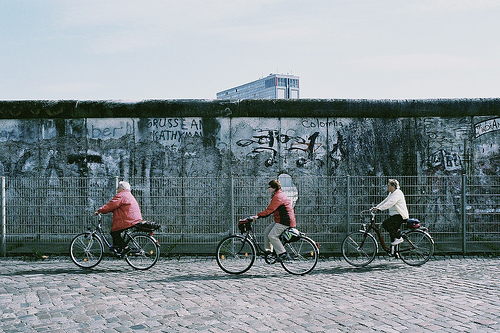
The Berlin Wall has become one of the city’s top tourist destinations, featuring in just about every guide to the area if not the country. However much of the wall itself no-longer exists. Of the original 155km that encircled West Berlin, only 1.5km still exists – much of that broken up rubble. Yet even this sporadic rubble attracts tourists in droves, many of whom come to the city specifically to witness the remnants of this historic barrier. And the numbers continue to rise: only last year, Berlin opened an official cycling trail tracing the full route of the original Wall.
For all it was once a symbol of hatred to those in East and West Berlin, the Wall is now paradoxically one of the city’s proudest boasts – a piece of cultural capital that currently draws millions to the city.
A Knock-on Effect
The last two decades have seen tourism boom across the whole of Europe, thanks to the unprecedented availability of cheap flights and death of currency restrictions. So it can be hard to gauge just how much effect the fall of the Wall has had on tourist numbers alone.
However, it’s undeniable that tourism numbers have exploded since that fateful day in 1989. In 1993, only 1.3million tourists visited Berlin each year. By 2009 it was over 7million. If you include day visitors, the number is now thought to be anywhere up to 100 million. Part of this can also be correlated to Berlin finding its feet in other ways, but there’s no doubting that it also became a strong tourist location in recent years.
Originally completely hemmed in by the untrusting GDR, West Berlin was a destination only for spies and penniless artists. East Berlin was hardly a destination at all. Post-reunification the city became an international destination, one now firmly near the top of all ‘must see sights in Europe’ lists.
Next year will mark the 25th anniversary since the fall of the Berlin Wall and it can be said, Berlin is still adapting and finding itself. It has historical scars and divides within its recent past, yet tourism, acceptance and contemporary life is gradually finding its place. Over the next few decades the city skyline will continue to develop, tourism will continue to boom and the city will continue to find its feet. It is a diverse and interesting city to visit and stands out from its European counter-parts due to the unique legacy of the Berlin Wall.
Jenny is a traveller writer and has recently visited the extraordinary city of Berlin. She has made her way across Europe and has found Berlin to be a truly unique destination. She recommends staying in Swissotel Berlin and it’s also worth making time to visit the Berlin Wall Memorial to really gain an understanding about Berlin’s past.
