The cost-of-living crisis is the current predominant discourse in the UK. The recent rise in energy prices has seen a dramatic increase in our energy bills and in turn has affected general usage habits, especially how we use every day electrical appliances around the home.
To assess how Brit’s habits have been affected by the rise in energy costs, Freemans conducted a survey asking 2,017 Britons which appliances they have limited their use of or cut out altogether to positively impact their energy bills and which items they simply can’t live without.
Oven revealed as the electrical item Brits have stopped using or limited use since the energy bill crisis
The study found that 65% of Brits have limited or stopped using certain electrical items in response to the rise in energy bills to reduce costs.
| Top 10 electrical items Brits have limited or stopped using | |
| Appliance | Percentage of Brits that have limited or stopped use |
| Oven | 40% |
| Washing Machine | 34% |
| Dryer | 33% |
| Kettle | 31% |
| Iron | 30% |
| Vacuum Cleaner | 29% |
| Toaster | 29% |
| Electric Grill | 29% |
| Hair Dryer | 28% |
| Microwave | 27% |
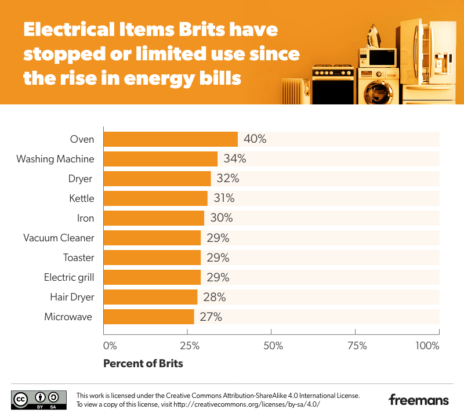
The findings reveal the most common electrical item that people have reduced their usage of is the oven. Just over two-fifths (40%) of Brits admitted that they have switched off or limited use of their oven since the rise in energy bills.
According to the research, Brits are replacing using the oven for more substantially cheaper options such as the air fryer which has seen an increase of 10% in usage. Air fryers are much cheaper and quicker to run – costing half the price of cooking in an oven. A 1KW air fryer would cost you around 5pto run for 10 minutes equating to 30p per hour. This is a massive saving compared to a 3KW oven which would cost you 34p to run for 20 minutes, which equates to £1.02 per hour.
The washing machine was the second most reduced item with over a third (34%) of people admitting they’ve reduced their usage.
The study further delves into the top five electrical items Brits have stopped or limited using since the energy bill crisis across categories including the kitchen, home entertainment, household maintenance, and personal use items.
| The top 5 electrical items Brits have limited or stopped using since the energy bill crisis and percent of Brits limited or stopped using them | |||||
| Category | 1st | 2nd | 3rd | 4th | 5th |
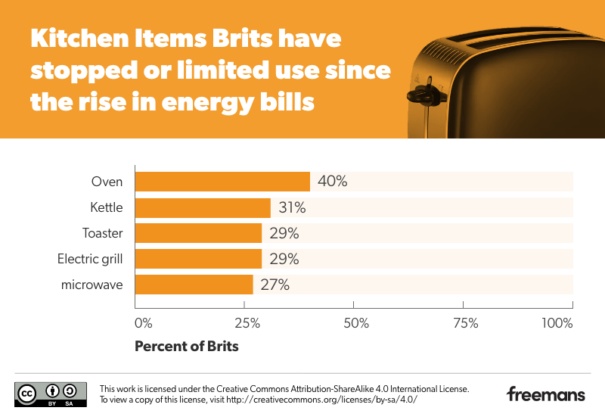
| Kitchen Items | Oven 40% | Kettle 31% | Toaster 29% | Electric Grill 29% | Microwave 27% |
| Entertainment Items | TV 24% | Laptop 22% | Tablet 22% | Game Console 21% | Radio 19% |
| Household Maintenance Items | Washing Machine 34% | Dryer 32% | Iron 30% | Vacuum Cleaner 29% | Plug-in Heater 23% |
| Personal Use Items | Hair Dryer 28% | Hair Straightener 22% | Hair Curler 17% | Essential Oil Diffuser 16% | Electric Toothbrush 14% |
It’s no surprise to see the oven as the most reduced electrical item in the kitchen as this is the most common item Brits are cutting back overall in their home.
However, what is surprising to see is the kettle follows in second with almost a third (31%) of Brits limiting their use of the kettle. This could be due to the kettle being one of the most expensive appliances to run, where an hourly brew is going to add £1.02 to a households energy bill in line with the energy cap.
When it comes to home entertainment, nearly 9 in 10 (88%) Brits have cut down their screen time due to being more conscious of their bills, with many reducing their usage of their TV, laptop, tablet, and game consoles.
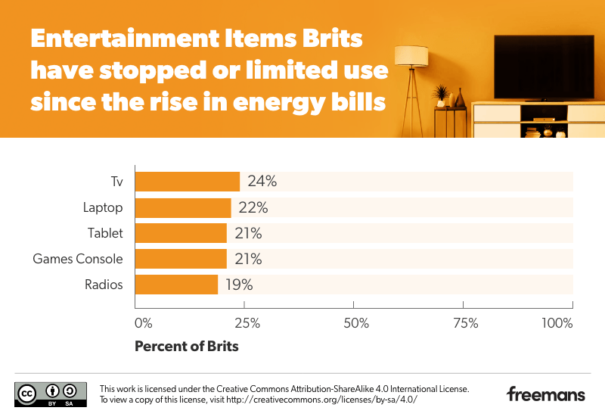
The TV is the first appliance Brits are cutting down on, with almost one in four (24%) choosing to limit or reduce how much time they are watching the box. An LCD TV is set to cost 48p per day or 6p per hour.
For household maintenance, the washing machine is the most common item Brits are limiting or stopping using altogether with almost one in three (34%) admitting this.
Just under a third (29%) of Brits have also reduced the use of their vacuum cleaner, opting for more manual ways of cleaning including using a dustpan and brush with one in six (15%) Brits stating they have purchased or plan to purchase this since the rise in energy bills.
For personal use, the hair dryer tops the list of the most cut item since the rise of energy bills, with almost a third of Brits (28%) shifting to air drying.
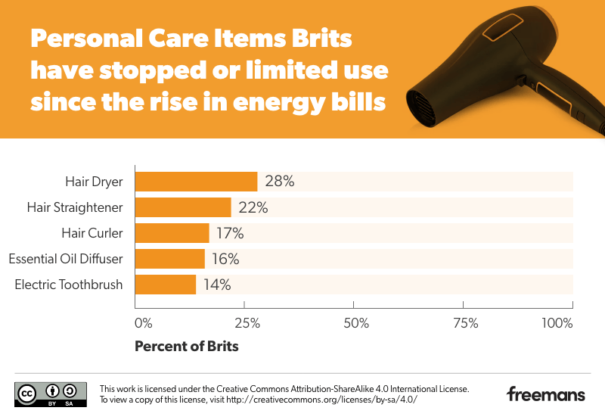
With that said, a further one in five (22%) of people have said they have cut out straighteners to alleviate the pressure on bills just that little bit more.
Brits simply can’t live without…
While there are items Brits are limiting and stopping using to reduce their bills, there are items that Brits simply are not yet willing to give up despite how costly they may be to run them
| The Electrical Items Brits can’t live without | ||
| Category | Electrical Item | Percentage of Brits increasing their use |
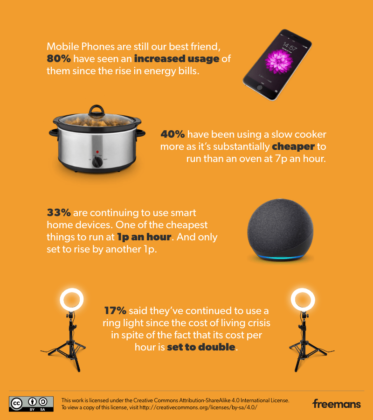
| Entertainment | Mobile Phone | 80% |
| Household | Smart Home Devices | 33% |
| Personal Care | Ring Light | 17% |
| Kitchen | Slow Cooker | 40% |
The findings reveal four in five (80%) Brits have increased their usage of their mobile phones. This could be due to the limited charging time versus its wireless usage. With unlimited usage, a mobile phone can be used for the internet, music, and other things that would usually use outlets and electricity.
Another item Brits won’t part with is their coffee machines with the research revealing that almost a quarter (24%) are continuing to use their coffee machines despite the rise in energy bills.
Brits seeking energy advice from Martin Lewis over government and professional bodies
When asked where Brits were seeking advice and help around their bills and energy usage, almost a third (30%) of Brits stated money-saving expert Martin Lewis as their most trusted source, ahead of government advice (15%), energy supplier helplines (13%) and charities and support groups (7%).
Gen-Z are more likely to seek advice through TikTok with one in four (24%) gaining advice from the platform.
One way that Brit’s can save money this winter is by making energy-efficient swaps. The air fryer is the most common energy saving swap Brits are making with almost one in five (18%) making a purchase in hope of reducing their energy bills.
| Most Common Swaps Brits are Making to Reduce Energy Bills | |
| Item | Percentage of Brits made the purchase since the rise in energy bills |
| Air Fryer | 18% |
| Disposable Razors | 17% |
| Manual Toothbrush | 17% |
| Laptop | 17% |
| Microwave | 16% |
| Non Electric Clothes Horse | 16% |
| Slow Cooker | 16% |
| Manual Flosser | 16% |
| Dustpan and Brush | 15% |
| Kettle | 15% |
Esther Hughes, Head of Media Optimisation at Freeman’s said about the findings: ‘In today’s modern world, we can’t help but rely on lots of electrical appliances – they make up our everyday. So instead of cutting out all electric appliances, it’s best if we approach our electricity usage and assess what we can realistically limit, and how we can use what we already have in an energy-efficient way.
According to our research, only one in three Brits knew they could use their electrical items for dual functionalities. This is where you can use your devices for other purposes other than their main functionality for example, a smart home security camera can also be used as a home baby monitor, or a handheld clothes steamer can also be used as a cleaning device for soft furnishings such as a sofa.
Along with this, Brits can also save money by making energy-conscious swaps. Our research found air fryers and slow cookers have seen an increase in use since the energy bill crisis, using less energy draining appliances such as the oven less often will help to keep costings down.”
Further findings of the State of Electricals Report are available to view here.
