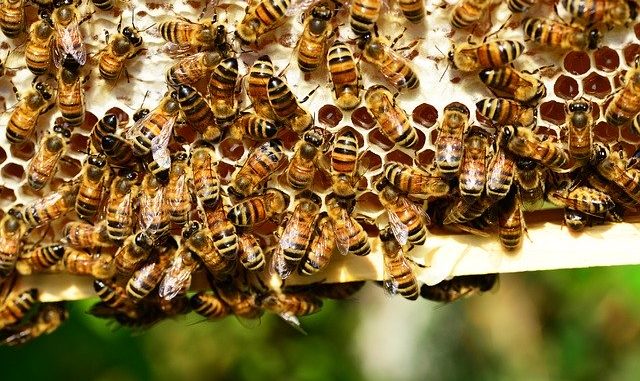
As today is World Bee Day this is such an important time to stop and think about what we can all do to help bees. What can we do to save bees?
Bees are vital to the survival of our ecosystem, as they pollinate our plants, flowers and 75% of our main food crops worldwide. It has been well documented that the number of wild bees has been on the decline in recent years, but which countries are creating a hive of activity with their beekeeping efforts?
Bee colonies are known to be rapidly decreasing, with a worrying 13 bee species going extinct in the UK since 1900, and a further 35 being added to the threatened species list. This threat became so large that in 2015 U.S. President Barack Obama launched the first ever national strategy to improve the health of honeybees and other key pollinators.
The research by Arena Flowers reveals that the countries seeing the biggest decrease in beehive population include Italy, which has seen a 54% decrease since 2007, Palestine with a 43% reduction in numbers, and Egypt with a 35% decrease in beehive population.
According to Greenpeace, humans are largely responsible for two of the most prominent causes of worldwide bee colony collapses – pesticides and habitat loss. Other factors causing the number of bees to die out include drought, genetic factors and air pollution – all of these are causes that we can try to reduce to help restore the number of bee colonies, particularly in countries with the highest declining populations.
So what can we do to help?
Here are Arena Flowers’ five top tips on what we can do in our own gardens, to help save the bees:
Mow your lawn less often
We all like to have a pristine garden, but cutting the grass less often gives bees and other pollinators shelter amongst the grass, and a place to feed. So consider giving your mower a break, and letting your grass grow that bit longer.
Plant a mix of bee-friendly seeds, plants and veg
Bees need a variety of different plants for food: from hedges and shrubs, to bulbs, herbs and vegetables. The greater variety of plant life you have in your garden, the greater variety of insects and birds your garden will be able to support. Don’t forget that bees enjoy ‘weeds’ such as dandelions, nettles and buttercups, which are really wild flowers, so leave a corner of your garden to grow wild.
Use bee-friendly pesticides
One of the easiest ways to help the bees is to stop using bee-harming pesticides and herbicides. Look for the least toxic options you can find, and try and avoid highly toxic chemicals such as rotenone, sabadilla and spinosad.
Make a bee nest
Queen bumblebees seek out places to hibernate in the winter before emerging in the early spring to create a nest. Bumblebees love to make their homes in old teapots; bury the pot, with a few dry leaves in it, just below the surface with the spout sticking out above the ground and you will make a bumblebee queen very happy.
Help a tired bee out
As a last resort, you can help revive a tired bee by feeding it a simple cocktail of white granulated sugar and water mixed on a teaspoon. Only help a bee if it has collapsed or is struggling, and please don’t leave the source of sugar water out for a long period of time – this is the equivalent of feeding the bees junk food and may tempt the bees away from the hive. Do not be tempted to offer honey as the honey may be imported and not suitable for British bees.
To see the full research, take a visit to the site here.
