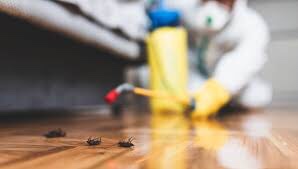
A pest control technician like www.pestcontrol-london.co.uk inspects and eliminates pests such as rodents, termites, and bed bugs from a commercial or residential property. The technician schedules appointments. Identification of unwanted visitors, implementation of the best pest removal methods, and preparation of suggestions to prevent future pest problems. An appointment with a pest control technician is usually held at a client’s property, and technicians work from an office.
A typical working week typically entails 45 to 47 hours of work, with a salary range of £17,000 to £30,000. Hours typically range from 8 am to 6 pm.
Ways to become a Pest Control Technician
1. Through an apprenticeship
An intermediate apprenticeship as a pest control technician might be your first step.
After you have successfully completed your apprenticeship, you can become a British Pest Control Association (BPCA) registered pest control technician.
How does apprenticeship work?
A training program that combines practical training with study is called an apprenticeship.
During your apprenticeship, you will:
1. You can earn a wage and get holiday pay if you are an employee
2. You will be working with an experienced staff
3. Improve your job-specific skills
4. You should devote at least 20% of your normal working hours to training and study related to your duties.
Apprenticeships can take between 1 and 5 years to complete, depending on their level.
Levels of apprenticeship
Apprenticeships have equivalent educational levels.

Some apprenticeships may also give you an additional qualification, such as a diploma.
Who can start an apprenticeship
Apprentices must meet the following requirements:
· Over 16 years old
· As a resident of England
· Not enrolled in a full-time program of study
2. Through direct application
It is possible to become a pest control technician directly. Typically, employers prefer candidates with GCSEs in English and mathematics.
It would be helpful if applicants had experience in building, health and safety, or handling chemicals. If you have the right qualifications, many companies will offer you in-house training.
3. By training with a professional body
Consider taking an online foundation course through a professional organization such as the British Pest Control Association. Afterward, you could go on to further training to earn industry-recognised qualifications.
Experience needed for pest control technician job
Work experience
It is imperative that you have previous experience working in places where health and safety procedures are followed if you wish to become a pest control technician. When it comes to people and the environment, you can use this to demonstrate to employers that you understand the importance of health and safety.
Your CV should be built as early as possible by accumulating relevant work experience. For example:
· Working in restaurants, hotels, or any environment that requires a high level of hygiene and health and safety is ideal.
· Placements that involve environmental health and safety are especially beneficial.
· Work-related experiences or placements that require you to do physical work under various conditions, such as assisting with construction work or working outside. It is because pest control can take you to all sorts of places, including food factories, attics, and sewers.
Volunteering
Look for volunteer opportunities that involve health and safety – like repairing a fence in a youth community centre or maintaining beehives on a city farm. It is a good idea to look for volunteer opportunities that involve working with animals (such as animal rehoming centres) or work in construction.
Skills needed for pest control technician job
If you are applying for a pest control technician job, you should include the following skills:
1. Good communication and customer service skills.
2. You need problem-solving skills to figure out where the infestation or danger is coming from and figure out how to deal with it.
3. You also need math skills to calculate the proper dose for chemicals.
4. You will need to know how to use fumigators and air guns in tight spaces, and how to get into places which may be cramped or high up.
5. A basic understanding and knowledge of health and safety is required.
6. An ability to drive is also required.
Skills can be developed over time by gaining vocational qualifications and work experience.
Work of a pest control technician
It is important to learn a little more about pest control so you can show potential employers that you understand the job well. Choosing this career path depends on whether you like the job in the first place.
Example job responsibilities:
· Finding out the nature of the issue and identifying pests that are causing the issue.
· Obtaining samples (and dead animals) for analysis and to assist in understanding the problem.
· Understanding how pests and vermin are getting into an area.
· Choosing the most effective control method based on your research.
· Pest control by spraying chemicals on insects such as cockroaches or flies.
· Birds and other larger animals can be controlled by placing traps, using poison, or by using air guns.
· Sealing holes, building screens, or installing spikes on a building to prevent pigeons from landing there can be done to prevent pests from returning.
· Offering advice on how people can prevent the problem from happening again – for instance, demonstrating a better way of storing food.
· Completing reports and keeping records of what you do.
· Managing, storing, and weighing out chemicals.
· Dead animals or captured animals should be disposed of in a safe manner according to regulations.
· It is important to avoid harming a species if there is another way to deal with the problem. For example, rehousing a swarm of bees in a hive with a local beekeeper may be a better solution.