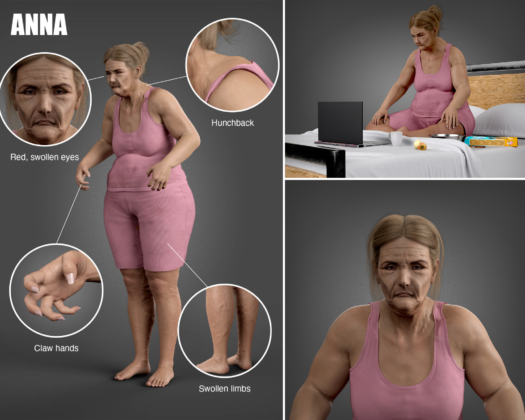
Meet Anna. With an arched back, claw-like hands, and dark, swollen eyes, she reveals just some of the ways the human body could change due to the long-term effects of working from home.
Recent figures show 20 million Brits work from home, with hybrid working remaining popular, although a study from the University of Leeds revealed a third (33%) of UK office workers have no dedicated workspace at home.

To visualise the effects of not having a proper place to work at home, Furniture at Work used scientific research and worked with healthcare experts to reveal what the remote worker of the future could look like. The shocking 3D model, known as Anna, highlights many long-term physical and mental health risks.
Anna displays many physical effects because of consistent use of technology, screen exposure and poor posture, as well as highlighting potential mental health issues.

Poor posture due to working from her bed has seen Anna suffer with an arched, hunched back with raised shoulders, rather than a typical upright position. Leaning forward and craning her neck has resulted in long-term back and neck pain. Working from bed is something that over half (56%) of homeworkers admit to doing.

Staring at screens all day, in an environment not designed for long periods of sitting and concentrating, can lead to eye strain and headaches. This is shown by Anna’s red, swollen eyes.
Long hours using a mouse or smartphone while working from home, causing her to curl her fingers into an unnatural position, has led to repetitive strain injuries (RSI) and permanent “text claw”
The University of Leeds study also analysed in-depth employee data to show that working from home without access to a specific desk or separate room leads to lower performance, job satisfaction and engagement.
Other health risks for Anna include:
Weight gain: Increased risk of obesity, diabetes, and heart disease due to lack of physical activity.
Weak immune system: Lack of sleep, insufficient fresh air, and poor nutrition from unhealthy snacking have weakened her immune system.
Anxiety and depression: Isolation and lack of physical activity have caused stress-related illnesses and mental health issues.
To help remote workers, health experts have provided their self-care tips:
1. Stretch and take regular breaks
Brian Clark, BSN, MSNA and Founder of United Medical Education, says:
“Remote workers should take regular breaks to stretch and move their bodies to help avoid back and neck pain.”
There are many benefits of taking regular stretching breaks while working from home. It alleviates muscle stiffness and soreness, improves posture and supports healthy physical wellbeing.
2. Follow the 20-20-20 rule
Sarah Gibson, Director of Proactive Healthcare, says:
“Following the 20-20-20 rule is a great way to look after your eyes if you spend long periods staring at screens. Look away from your screen every 20 minutes for 20 seconds and focus on something 20 feet away.”
3. Prioritise social connections and self-care
Many people rely on their workplace as a source of motivation to exercise and socialise. It’s important remote workers prioritise social connections; spend quality time with your family, join a club or class related to a hobby, or spend time with others outdoors. Try and stay active to combat adverse health effects like weight gain and mental health issues.
Brian Clark added: “Setting up a designated workspace with ergonomic furniture is also important for establishing clear boundaries between work and personal time.”
More imagery of Anna and details on the potential health risks of working from home can be found on the Furniture At Work blog.
