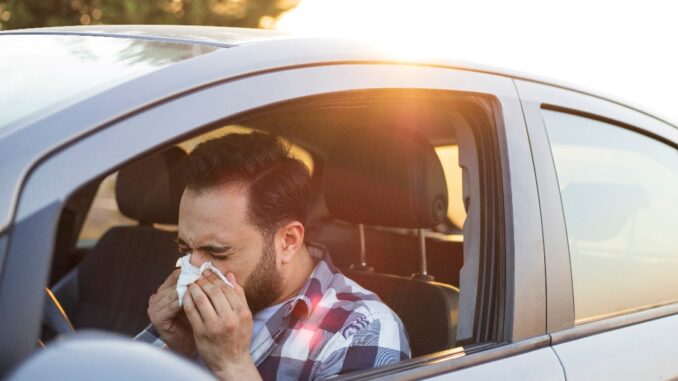
Hay fever sufferers have been struggling this summer due to the high pollen count, with Google searches around ‘hay fever’ reaching a whopping 271,000 searches in the past month. Yet the soaring pollen count might not be the only problem hay fever sufferers will face. Shockingly, driving this summer while suffering with hay fever and being unable to operate a vehicle due to eye irritation, coughing or sneezing could result in £2,500 in fines.
With the weather heating up, drivers suffering from those pesky summer allergies will be more fearful of sneezing when on the road. To keep you healthy and safe on the roads, car servicing and maintenance experts atATS Euromaster have provided 5 tips to pollen-proof your car this summer.
- Apply Vaseline
Petroleum jellies, such as Vaseline, are great at trapping pollen and stopping hay fever related sneezing. Just a few dabs under your nostrils means pollen and dust will attach itself to the sticky Vaseline and stop it from entering your nose and irritating your sinuses. This simple trick can help drivers avoid facing a fine this summer. If symptoms of hay fever such as sneezing, irritated eyes or coughing causes a driver to lose control of their vehicle, they can be fined up to £2,500.
- Clean your car
Keeping on top of cleaning your car will help keep any dust or pollen particles away. Make sure to hoover your carpets, mats, seat covers, dashboards and any other places that could gather dust.
If you don’t keep up with cleaning, the particles will be circulated around the car as soon as you turn on your air conditioning. To reduce the need for cleaning as many areas, we recommend replacing car mats with rubber versions, as pollen and dust doesn’t stick to these as much. This will ultimately help reduce the allergens in the car.
- Check what hay fever tablets you are taking
Many drivers take hay fever medication before heading out in warm weather, but some tablets containing antihistamines make you drowsy. This seemingly simple solution of hay fever tablets could put drivers at further risk as you can be convicted for taking legal drugs that affect your driving and cause drowsiness.
The Road Traffic Act related to driving under the influence of drugs or alcohol, does not distinguish between illegal drugs and over the counter medicine, so always check your medication before setting off. If deemed that you were driving under the influence, it could land you a further fine of up to £5,000.
- Regularly replace your pollen filters
Modern cars will likely have pollen filters fitted into the air con system to stop dust and pollen getting through the air vents and into your car. However, these filters can soon become blocked, allowing the particles to find their way in.
Simon Waye, Technical Support Engineer at ATS Euromaster reported “Not all cars are fitted with these filters, and this is something we’d expect to see in newer models. If you do have one, your pollen filter should typically last 12,000 miles before needing replacing. To be safe, we recommend changing them once a year.
They can often be changed at home and are usually held in place by clips that can be accessed without any tools. However, you may need a screwdriver if yours has been in place a long time.”
Luckily, changing and replacing a pollen filter can be done at home, if you have a replacement to hand.
- Keep your windows closed
While this may seem counter-intuitive in the warmer months, keeping fresh air out of your car can also keep the allergies at bay. Using your air conditioning allows you to take advantage of the fitted pollen filter while also getting the same fresh air affect without dust and pollen getting into your car.
If you suffer extremely badly from hay fever, you should consider always keeping your windows up, even when the weather doesn’t seem as warm. This stops dust and pollen gathering on your car that you would then need to clean.
