For many homeowners and renters, their home’s interior doors can easily get overlooked until they start to show their wear and tear.
Data collected by Checkatrade shows the average cost of a new internal door replacement is £250 per door. However, in most cases, doors can be given a new lease of life for as little as £15 as Jimmy Englezos, Senior Brand Manager from Ronseal explains.
“Rather than simply scrapping the door and buying a replacement, a fresh coat of wood paint can breathe new life into it and make it as good as new. For any small chips and knicks, a suitable wood filler can be used to smooth out and patch up the surface to make it appear brand new.”
As Google Searches for ‘interior door painting’ increase 24% year on year, and TikTok searches for ‘door painting tips’ seeing a 100% increase from 2023, Jimmy has shared some top tips and a seven-step guide to painting interior wooden doors.
Step-by-step guide to painting an interior door:
- Prep the area – Cover any nearby surfaces with dust cloths, old sheets, or newspapers to protect from any paint splatters.
- Remove the door handles – Using a screwdriver, remove the door handles and use some painters tape to cover the metal hinges.
- Prep the door surface – It’s recommended to gently sand the surface of the door to remove any previous loose or flaky paint or to smooth out the surface. Make sure to wipe down the door surface to remove any built-up dust or dirt and inspect the surface for any chips. If required use some wood filler to even out the surface.
- Apply a first coat – Starting with the door edges, apply the first coat of paint. Make sure not to apply too much paint to prevent any drips, bubbles, or marks.
- Leave to dry – Leave the first coat of paint to dry for at least 5 hours or whatever the paint manufacturer states. If you don’t, you may smudge the wet paint which will affect its finish.
- Apply a second coat – Before applying a second coat of paint, very lightly sand the surface before wiping it down with a damp cloth. Once painted, leave the door to dry for 24 hours. Leave the door open to try and encourage airflow.
- Reattach handles – Once completely dry, reattach the door handles and remove any painter’s tape and protective dust sheets.
Common painting FAQs answered
Jimmy has also answered some common FAQs relating to painting interior doors:
- Should I use a brush or roller to paint a door?
“A roller is best suited to painting a flush/flat door since this will help to prevent any brush marks from appearing. However, a wide brush can be used to smooth and remove any roller texture.
“For panelled doors, a paintbrush is better suited to the task as a roller can cause the paint to pool between the wood mouldings.”
- What kind of paint do you use on interior doors?
“Wood paint is best to use for interior doors. These types of paint seal the door to create a waterproof barrier that prevents moisture from getting into the wood. They also provide a robust finish to minimise any scuffs and scratches.
“It’s best to avoid oil-based paint, particularly with white doors. The pigments tend to fade and turn yellow over time which can make the door look stained and dirty. This process can happen quicker when the door is starved of light.”
- Can I just paint over chipped paint?
“It is not advised to do this as the new paint layer will likely also peel off as it is still relying on the old peeling paint to stick to the door. It is better to use sand sandpaper to remove any loose or flaking paint before wiping down the surface using a damp cloth. The new paint can then be reapplied over the prepared surface and left to dry.”
- Should the door be the same colour as the walls?
“This is a personal preference. If you want your doors to seamlessly blend in with the room environment then painting them the same colour as the walls will help to give a sleek, modern aesthetic.
“Colour drenching is becoming an increasingly popular trend which involves painting all surfaces in a room a single colour, from the skirting boards to the ceiling. Ronseal’s newest paint product, One Coat Everywhere, is suitable to use on walls, ceilings, and woodwork meaning homeowners no longer need to match up separate paints for each surface.
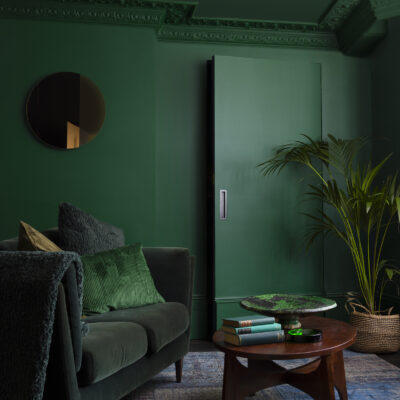
(Image Credit: Ronseal)
“However, many people still like to keep their doors the same throughout the home or match the colours of any woodwork in that room to the wooden door. It is really all down to whatever the homeowner chooses.”
Top painting tips
As for Jimmy’s top tips for painting, he recommends:
- Stirring the paint beforehand – Make sure to thoroughly stir the paint beforehand to get rid of any lumps and to give it a smooth consistency. This can also help to keep the colour consistent.
- Leaving the door on the hinges – Not only does this require more work, but it means you can paint both sides of the door at the same time. Also, you risk scratching the door’s fresh paintwork as you try to reattach it.
- Preparing in advance – Make sure to thoroughly prep the area beforehand rather than jumping straight to the painting stage. Laminate woods in particular will require some wood primer to help the paint better adhere to the surface.
For more information, please see the Ronseal website: https://www.ronseal.com/how-to-guides/how-to-choose-the-right-indoor-wood-paint/
