
Obesity can be difficult to manage in dogs with 50% of dogs in the UK thought to be classed as overweight or obese. There are many contributing factors towards obesity including diet, exercise and age however there are some breeds that are more prone to the condition than others.
In fact, scientists have revealed that there is a genetic variant called POMC (proopiomelanocortin) which predisposes dogs to obesity and is found in a quarter of labrador retrievers and two-thirds of flat-coated retrievers.
In addition to labradors and retrievers, the other dog breeds which have higher odds of being overweight are:
- Pugs
- Beagles
- Golden Retrievers
- English Springer Spaniels
- Border Terriers
- Labrador Retrievers
- Cavalier King Charles Spaniels
- Cocker Spaniels
One of the potential reasons for the high rates of dog obesity is dog owners treating their pets to human food without knowing how this can impact their diet. In fact, a survey by The Grocer found that a whopping 72% of pet owners admitted to feeding their pets human food. While not all human food is necessarily bad or unsafe for our pets, we often don’t provide them in moderation. This can lead to our pets getting a lot of excess calories without us even realising.
Lisa Melvin and her team from Pet Range have explored how human food impacts our dogs’ diets and offered some advice around reducing your pet’s intake, please see below:
How human food impacts our dogs’ diets
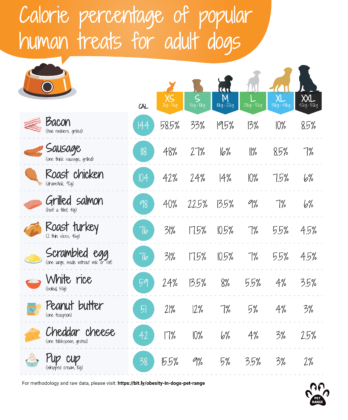
Meat is a common leftover we treat our dogs to which can take up a surprisingly large amount of their daily recommended calorie intake. Take bacon for example — while you may think two rashers seem like a reasonable portion size, for very small adult dogs, such as chihuahuas or miniature dachshunds, this equates to 58.5% of their daily recommended calories. For small-sized dogs, such as pugs, this portion size equates to a third of their daily calories, and for medium-sized dogs, like beagles, it equates to a fifth. Even for very large dogs weighing 40kg+, such as rottweilers, two rashers of bacon are the equivalent of 8.5% of their daily calorie recommendation.
Sausages and roast chicken are two other human foods which can take up a lot of our pet’s daily calories. One thick sausage, for example, takes up 27% of a small dog’s daily calories, 16% of a medium dog’s calories, and for large dogs, such as Dalmatians, this portion size equates to 11% of their overall daily calories.
It isn’t just meat which can be highly calorific for our dogs, however. If you have leftover scrambled egg from your full English, the equivalent of one egg can take up 31% of an extra small dog’s calories, although this comes to just 4% of calories recommended for an extra large dog, such as a Labrador. The lowest calorie human treat on our list is a 10g whipped cream pup cup, although this still takes up just under a tenth of a small dog’s daily calories.
Tips for reducing your pet’s calorie intake
- Provide them with filling, nutrient-rich meals
Ensuring your dog receives a balanced and nutritious diet isn’t just crucial for maintaining their overall health and wellbeing, but it can keep them satisfied for longer, which can lead to a reduction of calories consumed. Opt for high-quality dog food that is rich in essential nutrients and is designed to provide satiety. Look for options that include lean proteins, a variety of vegetables, and wholesome grains. If your pet is grain-free, opt for dog foods with an alternative source of carbohydrates, such as chickpeas. - Find non-food based treats
Rewarding your furry friend doesn’t always have to involve treats high in calories. Consider alternative, non-food-based rewards, such as extra playtime and affection, or even a new toy. Not only will this help reduce your dog’s calorie intake, but it can also enhance the bond between you and your pet. Look for interactive toys that stimulate their mind and keep them engaged without adding extra calories to their diet. - Make exercise fun
Increasing your dog’s physical activity is an effective way to manage their weight and burn calories, however, you may find your pet is less active if they are overweight or obese. So try to make exercise as enjoyable as possible for them by incorporating activities they love. Whether it’s a game of fetch, a brisk walk, or even a swim, find activities that both you and your dog can enjoy together. Regular exercise can also help keep your pet mentally stimulated and have a positive effect on their mental health. Just remember to ease your pet slowly into new forms of physical activity, especially if they are obese, as a major change to their routine can be a big shock to the system. If unsure, ask your vet for advice on the best activities for your pet to try out at the start of their weight loss journey. - Ensure they enjoy everything in moderation
Like humans, dogs can benefit from a balanced and moderate approach to diet and treats. While it’s essential to cut down on excessive treats and high-calorie snacks, completely depriving your dog may lead to cravings or unhealthy behaviours. So make sure you allow them to enjoy the occasional treat, but choose wisely. Opt for low-calorie treats or break larger treats into smaller portions to spread the enjoyment without overindulging.
Remember, you should always speak to a vet before making major dietary adjustments. Weight gain and obesity may be indicators of other conditions, such as hypothyroidism, so your vet may want to rule other factors out before starting your pet on a new diet.
“It’s not surprising that obesity can have such a big impact on a dog’s health, but many of us don’t realise just how many conditions can be linked to having excess weight. From bone health to heart health to simply overall wellbeing, obesity can come with a huge toll on your pet. Fortunately, there are a number of ways to help your pooch stay a healthy weight, even if they’re on the obesity-prone list! To help your pet lose weight healthily and sustainably, ensure they have filling, balanced meals and enjoy their food in moderation.
“Cutting down on human treat food can also make a big difference. Most of us don’t realise just how calorie-dense our food can be for our pets. This is especially the case for smaller dogs and breeds which are more obesity-prone, such as pugs and labradors. For small dogs like pugs, a single sausage can take up almost half of their daily recommended calorie intake.
“It’s important to note that it’s always a good idea to see a vet if you have concerns about your pet’s weight. Every dog is different, and just like humans, they all have different nutritional needs. Whether your furry friend is a puppy or fully grown, consult with the vet before making major dietary changes.”– Lisa Melvin, Pet Range
