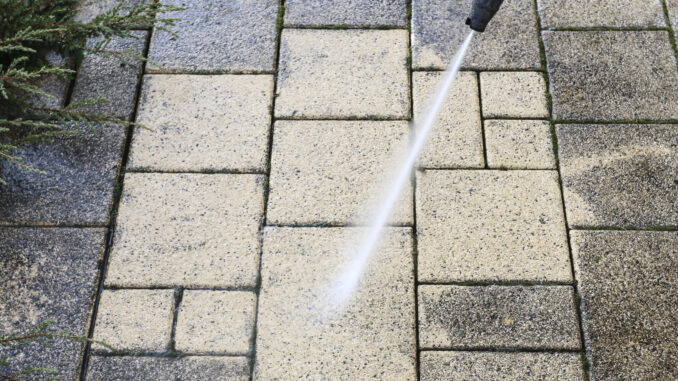
Almost two-thirds (60%) of homeowners say they avoid hosting outdoor gatherings because of stains they can’t remove. But experts warn that leaving organic growth untreated could lead to costly cleaning, repairs and even replacement in 2026.
Specialists are predicting the worst year on record for patio staining, driven by three consecutive winters that have created ideal growth conditions.
More than 240 days of measurable rainfall, record-low winter sunshine hours, increased shading from urban densification and warmer winters reducing natural die-off all mean millions of patios are now at heightened risk.
“Most natural stone sealers are microporous, organic growth such as lichen can still grow within the stone,” warns Alex Essex, outdoor surface specialist at the Patio Black Spot Removal Company. “During wet periods, algae will thrive, sealers won’t stop this and can be expensive, needing to be re-applied every few years. Instead, prevention starts with good patio design, proper drainage, reducing puddling, and allowing sunlight to reach the surface.”
The 7 most common organisms growing on outdoor surfaces
1. Green algae – thrives in low light; creates slippery surfaces.
2. Black lichen – a fungus/algae organism that grows within stone.
3. Moss species – retains water and increases frost-damage risk.
4. Fungal spores – contributes to stubborn black-spot staining and white fungi.
5. Airborne mould – including Cladosporium and Alternaria.
6. Pollen clusters – feeds and accelerates algae growth.
7. Soil bacteria – carried onto surfaces by rainfall and run-off.
Many of these organisms trap dirt, pollutants and moisture against the stone, reducing slip resistance and accelerating freeze–thaw deterioration.
“People assume patio staining is harmless until they see what’s really happening on the stone,” says Alex. “That white fungal layer you sometimes see means the surface hasn’t been properly cleaned in three to five years, and by then, the fungi have already etched into the surface. You can remove the growth, but the marks will be permanent.
“With wetter, longer winters, these organisms have the perfect conditions to spread and cause structural damage. It’s a gradual weathering process that often goes unnoticed until cracks and irreversible marks appear.”
He adds: “The cost of ignoring it can be huge. Replacing even a small 30m² patio can easily reach £4,500 once materials and VAT are included. Regular care is far cheaper than the repairs homeowners end up facing when white fungi and other growths are left to take hold.”
Six steps to prevent staining and avoid unnecessary costs:
1. Improve drainage to ensure water runs off into beds, avoiding puddling and reducesmoisture retention.
2. Increase sunlight exposure by cutting back hedges and winter foliage.
3. Sweep regularly as organic debris accelerates staining.
4. Use eco-safe ‘spray and leave’ algae treatments through winter.
5. Avoid bleach, vinegar and harsh chemicals.
6. Clean early before organisms mature and bond to stone.
“Following these steps and making sure to do regular annual cleaning is the only effective way to stop these organisms establishing themselves. Once they take hold, the damage is already underway,” Alex warns.
