Around 78% of British adults have access to a private garden, and with spring marking the busiest lawn treatment period of the year, many are now rushing to repair winter damage and boost grass growth ahead of summer.
But according to garden specialists, one simple mistake is repeated in thousands of gardens every season, and it’s not about choosing the wrong fertiliser.
Instead, it comes down to what happens in the first few hours after fertiliser is applied.
Alex Essex, specialist at PBSRC, says most people focus on what they’re putting on the lawn, rather than how they’re managing it once it’s down.
“Parents often think fertiliser makes the whole lawn dangerous for weeks, which isn’t really the case,” Alex explained. “The real issue is when kids run or crawl on the grass while granules are still there or the product hasn’t been watered in properly. That’s when it can get on hands, shoes or toys.
“Once it’s been absorbed and the lawn is dry, it’s generally safe for normal play.”
According to Alex, the biggest issue isn’t fertiliser itself, it’s surface residue.
When granules are left sitting on top of the grass, whether due to under-watering or relying on rainfall, they can easily transfer onto children’s hands, outdoor toys and shoes, patio areas, pets and puddles after heavy rain.
“Most household fertilisers are absorbed quickly,” Alex says. “After watering, and once the surface is dry, typically within the first 24-48 hours, lawns can usually be used as normal, but it is always good to clean small hands after making contact to avoid residue.
“People often think fertilised grass itself is toxic for days, which isn’t really the issue. The main danger is when dogs and cats sniff out or eat the granules straight off the surface before they’ve been watered in. That’s when you can see upset stomachs or worse.
“Once it’s properly applied, watered in and the lawn is dry, it’s generally safe for normal family use, including pets and kids. However, it is always important to double check products as some that are iron based require up to two weeks to avoid irritation and staining,” Alex shared.
Another common spring habit is applying more fertiliser than recommended in the hope of speeding up results.
Alex warns that this can increase surface exposure: “Applying more than recommended doesn’t improve results and can leave excess granules sitting on the surface, increasing the chance of children picking them up,” he explained. “It is important to strictly follow the label amounts as it is both safer and more effective.”
He also advised against letting the weather do the work. “Heavy rain soon after application can move fertiliser into puddles, paths or patios where children often play. I recommend applying during dry weather and watering lightly rather than relying on rainfall.”
The solution, he says, is straightforward:
Apply fertiliser evenly and at the correct dosage.
Water it in thoroughly.
Keep foot traffic off the lawn until the surface is fully dry.
Brush or sweep any stray granules from patios and hard surfaces.
“Avoiding fertiliser altogether isn’t usually necessary,” Alex added. “Modern domestic lawn feeds are designed specifically for home gardens and are considered safe when used exactly as directed. It is always best to time application around when children are indoors or at school to allow the lawn to dry before play.
“The reality is you don’t need to choose between a healthy lawn and a safe garden. It’s just about simple precautions. Water it, let it dry, and clear up any loose granules. Most problems happen when those steps are skipped.”
With lawns becoming multi-use spaces for entertaining, play and pets, experts say the key to safer spring feeding isn’t avoiding fertiliser, it’s managing the short window before it settles in.
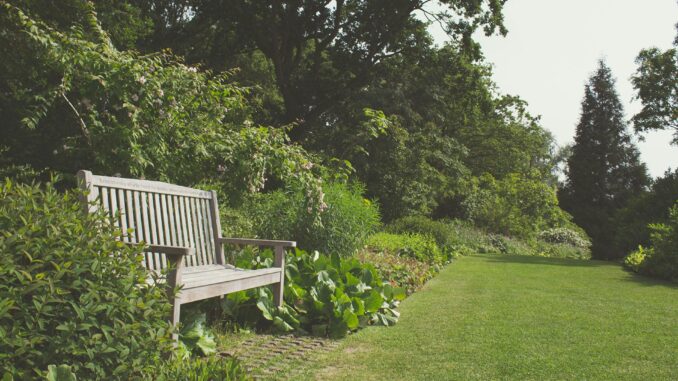
Photo by Creative Vix: https://www.pexels.com/photo/gray-wooden-bench-surrounded-by-green-grass-trees-7294/
