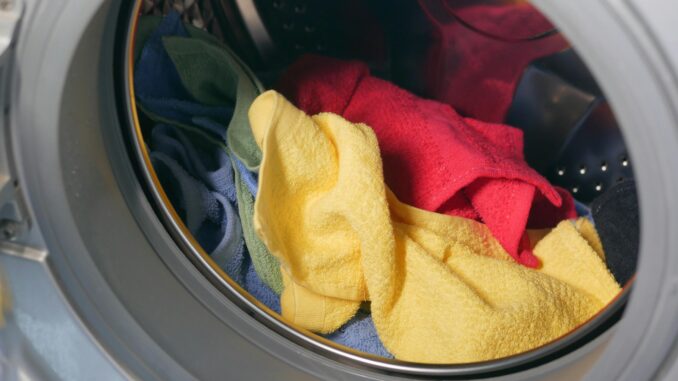
With winter months fuelling mould build up in homes, an appliance expert has warned homeowners to check the most commonly overlooked spot for mould stains: their washing machine.
The colder months often lead to laundry drying indoors, and windows not being opened to let condensation out, meaning mould can build up in all kinds of unusual places in the home.
According to Gwil Snook, Laundry Appliance Expert at AO.com, the washing machine seal is a prime target for mould growth.
“Washing machine rubber door seals are one of the biggest hidden breeding grounds for mould in the home. They trap moisture, detergent residue and fabric fibres during and after washes, creating the perfect warm, damp environment for mould and bacteria to thrive. Because the seal folds inward, it often stays wet long after a wash has finished, especially if the door is kept closed.
“If your clothes smell stale when they come out of the wash, or you notice that your washing machine smells a bit funky when you open the door, then the chances are that you’ve got a mould problem.”
With UK Google searches for “how to clean washing machine mould” spiking, it’s clear many Brits are facing the same issue.
The good news is that mould can be removed and prevented from returning with a few simple steps.
Below, Gwil shares six simple and effective hacks to keep washing machines clean and mould free.
- Clean the seal with white vinegar and a microfibre cloth
“White vinegar is a natural wonder for breaking down the soap scum and lint that mould feeds on, and you can often get hold of a bottle for less than 50p. I recommend wedging vinegar-soaked cotton pads into the rubber and leaving them for around two hours to work their magic. Then, simply grab a damp microfibre cloth and wipe the area clean. For more stubborn stains, you may need a diluted bleach solution. Just remember to always follow it up with a high-temperature maintenance wash to clear any residue before your next load.”
- Leave the door and detergent drawer open after each wash
“Closing the door straight after a cycle might look tidy, but it traps moisture where you can’t see it. Letting the machine air out between washes is one of the simplest habits you can get into if you want to avoid mould.”
- Wipe down the door seal and drum once a month
“The door seal is usually the first place mould appears, and it catches people out. A quick wipe every so often stops build-up before it turns into a bigger problem – and helps keep that musty smell away from clean laundry.”
- Clean the detergent drawer and filter once a month
“If a washing machine smells even when it’s empty, the drawer or filter is usually to blame. These areas are easy to forget, but keeping them clean helps the whole machine run better and stay fresher for longer.”
- Run empty cleaning cycles to kill early signs of mould
“Detergent alone won’t keep a washing machine clean. A regular hot empty cycle clears out hidden residue and build-up inside the drum and pipes, which is often what causes lingering odours and mould.”
- Don’t overload your machine and remove wet laundry immediately
“Overfilling the drum or leaving wet clothes sitting inside creates the perfect damp environment for mould. Finishing the job properly and giving the machine space to drain makes a noticeable difference over time.”
For more information about laundry hacks and washing machine maintenance, visit the AO.com laundry advice hub.
Photo by Towfiqu barbhuiya: https://www.pexels.com/photo/towels-inside-a-washing-machine-11899611/
