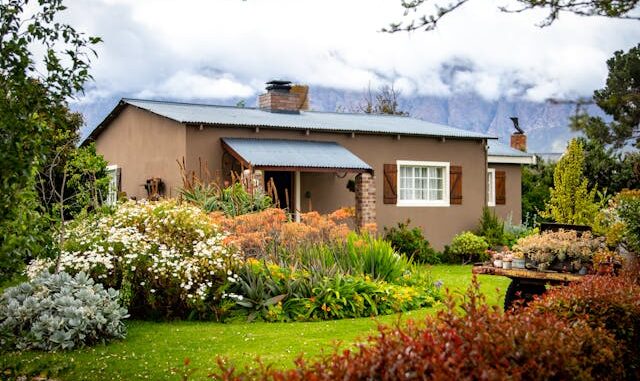
Spring is here, and now is the time to get out into the garden and get it ready for peak summer entertaining. Whether you are planning a blowout World Cup watch party or a family barbecue, a few smart layout tweaks now can set your outdoor space up for months of use.
Christopher Murphy MBE, founder of Dunster House, garden building specialist, shares simple but effective ways to plan your garden layout for the season ahead.
1. Position key features first
When considering the layout of your garden, you should start by positioning the main structural feature, or features, before planning anything else. If you have, or intend to install, a garden building such as a shed, summer house or garden office, its placement should be decided first, as it will influence the entire layout.
If no structure is involved and a patio or decked area will serve as the focal point, prioritise its location instead.
These permanent elements should act as anchors for the design, with all other features arranged around them to ensure a cohesive and functional garden layout.
2. Map sunlight, shade and wind
Before committing to the layout of your garden furniture or planting scheme, take time to observe how natural elements behave across your space throughout the day. Assess the garden in the morning, afternoon and evening to understand where sunlight is strongest, which areas remain shaded, and how these conditions shift over time.
This information is key to both plant placement and deciding where to place your functional zones. For example, areas of the garden that receive consistent sunlight are best for sun-loving plants, such as roses and agapanthus, as well as seating or social spaces. Whereas shadier areas are better suited to shade-tolerant plants like ferns and hydrangeas, and storage.
It’s also worth paying attention to how the wind behaves in your outdoor space. If your garden is quite open, you might notice certain areas are more exposed than others. Try to place garden furniture somewhere a bit more sheltered and consider using hedging or fencing to help reduce wind impact when a storm hits.
3. Introduce levels to create depth
A flat garden can often feel smaller than it really is. When everything sits on the same level, different areas tend to blur together, and there’s nothing to draw the eye or add a sense of depth naturally.
Introducing changes in height can help open the space up visually. Adding raised decking for a seating area, for example, against a ground-level lawn or planting zone, creates contrast and gives the garden a clearer structure.
If you have a small space, even subtle changes in height can make a garden feel larger and more considered; simple additions like tiered planters or varying heights of pots can add to the visual interest of a space, making a garden feel better organised and less cramped.
4. Plan clear pathways through the space
Make sure movement through your garden feels easy and intuitive, with natural routes between each area. Even those who haven’t visited before should be able to move from one area (or zone) to another without awkward turns or walking across planting or lawn unnecessarily.
A good rule of thumb: if people regularly cut across the lawn instead of using the intended route, it’s a sign the layout isn’t working as well as it could. Even if your garden already has a pathway, it’s worth reassessing whether it’s actually in the right place, ask yourself:
Does it follow the natural flow of how you use the space?
Does it connect key areas like seating, doors, and access points in a practical way?
If not, small adjustments, such as widening it, slightly redirecting it or adding stepping stones along commonly used routes, can make a big difference.
The end goal is to design pathways that feel natural, leading people to use them without thinking and without cutting across areas to get from A to B, helping the whole garden feel more functional and well-planned.
5. Use colour to influence how big your garden feels
Another consideration when tweaking the layout of your garden is where certain colours feature and how this impacts the illusion of space in your garden.
Lighter tones, such as pale paving, soft greys or light stone, help reflect light and can make an area feel more open and spacious. Using these colours in key areas like patios or pathways can visually expand the space.
In contrast, darker shades work well around the edges of your garden. Fences, walls or boundary planting in deeper tones can recede visually; this helps create a sense of depth and makes the garden feel larger than it is.
When used properly and thoughtfully, colour can guide the eye and enhance the layout. Correct placement of colours can also give the illusion of a more open, balanced space without actually changing the physical footprint or garden contents.
