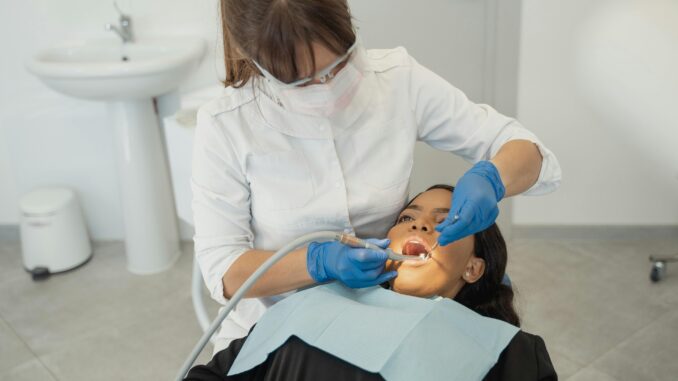
Millions of menopausal women in the UK are unknowingly living with dental symptoms caused by hormonal change, yet the government’s landmark Renewed Women’s Health Strategy, published on 15 April 2026, makes no specific mention of oral health.
Approximately 13 million women in the UK are currently perimenopausal or menopausal, equivalent to around one third of the entire female population. A 2025 systematic review and meta-analysis found that around half of postmenopausal women experience dry mouth (xerostomia), a condition that strips teeth of saliva’s protective function and accelerates decay, while between 18% and 33% suffer from burning mouth syndrome, a persistent burning or scalding sensation across the tongue, lips, or palate that is frequently misdiagnosed or left unexplained.
Despite growing clinical evidence, a 2025 peer-reviewed scoping review confirmed that clear clinical guidelines for managing menopause-related oral health remain absent, and that healthcare providers frequently do not advise women on the oral changes they may experience. The British Dental Association and National Federation of Women’s Institute have both warned that the UK dental health crisis is hitting women hardest, with hormonal changes throughout life placing women at significantly greater risk of unmet dental need.
A routine private dental check-up typically costs between £50 and £90. By contrast, treatment for established gum disease starts at around £199 for a deep clean, rising to more than £4,000 for complex surgical care. Identifying hormone-related oral health changes early before they develop into clinical disease is significantly cheaper for patients and more straightforward to treat.
Dr Bhavika Parekh, General Dental Surgeon at Smile n Shine in Newbury, said:
“We see women regularly who have been experiencing dry mouth, bleeding gums, or a burning sensation for months, sometimes years, without ever connecting those symptoms to their hormones. The national conversation around menopause has come a long way, and the new Women’s Health Strategy is an important step forward, but the impact on oral health is still not getting the attention it deserves.
“Oestrogen plays a direct role in gum tissue health, saliva production, and even the density of the jawbone. When those levels fall, the risk of gum disease, tooth sensitivity, and eventually tooth loss all increase. These are not cosmetic concerns, and they are largely preventable with the right support. A dental check-up should be as routine a part of a woman’s menopause care as a GP appointment.”
Five oral health changes menopausal women should not ignore
Dr Parekh advises women who are perimenopausal or menopausal to look out for the following symptoms, all of which are more manageable when identified early:
- Dry mouth that does not go away.
Reduced saliva linked to falling oestrogen levels leaves teeth vulnerable to acid, bacteria, and decay. Mention it to your dentist, not only your GP. - Bleeding gums during brushing.
Gum sensitivity and inflammation commonly increase during the menopause transition. Bleeding that is new or worsening is a clinical signal rather than simply a sign of poor brushing. - A burning or metallic sensation in the mouth.
Burning mouth syndrome affects between 18% and 33% of post-menopausal women and is frequently misdiagnosed or dismissed. A dentist experienced in menopausal oral health can help identify and manage it. - Teeth that feel more sensitive than before.
As gums recede and jawbone density gradually reduces, root surfaces become exposed. Catching recession early limits its progression and helps to prevent tooth loss. - A sense that teeth feel less stable.
Oestrogen deficiency reduces the density of the bone supporting the teeth, the same mechanism that drives osteoporosis elsewhere in the body. Any mobility or shifting warrants prompt professional assessment.
Photo by Tima Miroshnichenko: https://www.pexels.com/photo/woman-in-white-long-sleeve-shirt-checking-the-teeth-of-woman-in-black-long-sleeve-shirt-5355834/
