At a time when transparency and ethical sourcing are becoming central to luxury purchasing decisions, new data reveals a clear gap between what consumers expect and what they are actually told. More than two thirds of U.S. consumers say knowing where a diamond comes from influences their likelihood to buy, yet only 27% of past purchasers recall being told the specific country of origin.
What Drives Diamond Purchase Decisions Today
ORIGIN De Beers Group (ORIGIN) has released its inaugural Provenance Awareness Index, a data led benchmark designed to unpack how today’s consumers define value when purchasing a diamond. Price remains the leading consideration, with 37% of respondents citing value for money as their top criterion and 29% valuing craftsmanship, while transparency is gaining importance, as 16% of shoppers place clear origin information above all else, showcasing a growing appetite for traceable diamonds and signalling a shift in how trust is being defined in the category.
This disconnect highlights a clear gap between consumer expectations and the information provided at the point of purchase.
Awareness Gaps and Generational Differences
The research segments responses by age, gender, income and purchase history to reveal nuanced patterns in behaviour, and it also measures awareness of traceability and the level of information provided by retailers, finding that 56% of respondents know that diamonds can be traced to specific regions while 44% are not.
Younger buyers (18 – 34) are more likely to receive detailed provenance information and to be influenced by it, whereas older consumers often rely on reputation and tradition and report receiving no origin details, highlighting a generational shift in expectations around transparency and information sharing.
Provenance is Becoming a New Layer of Value
The index also highlights how consumers balance traditional and emerging priorities when choosing a diamond. While price and craftsmanship remain central to decision making, provenance is increasingly shaping how confidence and trust are established at the point of purchase.
Retail Communication is Not Keeping Up
Awareness of traceability is uneven as just over half of shoppers know that diamonds can be traced, leaving a sizable portion needing education. When asked what they were told at the point of sale, 27% said they received specific country information, 22% were told only a general region, 17% received no information, 3% heard details relevant to lab grown stones and 12% could not recall.
This highlights a clear communication gap at retail level, where consumer interest in provenance is not being consistently met with clear information.
Industry Response
ORIGIN’s Head of Brand, Anouk Lange, said that the results “demonstrate how modern consumers are balancing heart and head.” She noted that people still expect fair pricing and exquisite craftsmanship but also want to know the story behind their jewellery, and by providing transparent information about each diamond’s journey from mine to showroom ORIGIN can help customers make choices that honour both their values and their investment.
“For the industry, this is a clear signal that transparency is no longer optional, but expected,” Lange added, noting that the index will become an annual benchmark, tracking shifts in awareness and highlighting progress as more retailers adopt comprehensive provenance protocols.
Explore the Findings
To explore the Provenance Awareness Index, visit https://origin.debeersgroup.com/diamond/provenance-awareness-index/.
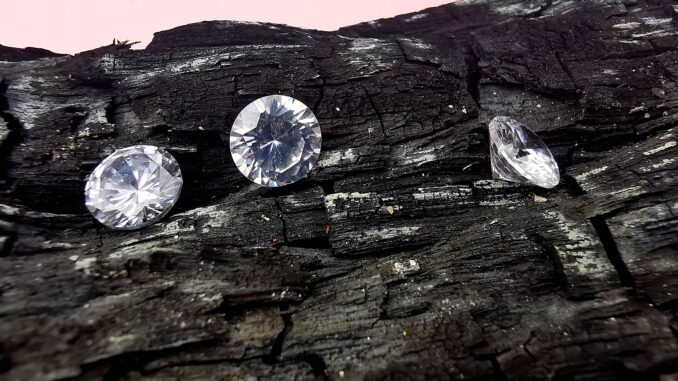
Photo by Karen Laårk Boshoff: https://www.pexels.com/photo/diamonds-on-charcoal-in-close-up-8395024/

Leave a Reply