From Monday 26th October, the sun will set before 5pm, plunging millions of motorists into rush hour darkness.
Recent research from motorcycle insurance brand Lexham Insurance found nearly 2 in 5 motorists (38%) avoid driving or riding in the dark. That’s 16.5 million people based on the latest GB driving licence data.
Over a third of drivers and riders alike (36%) say poorly lit areas make them feel most unsafe. Nearly half of drivers (46%) are dazzled by blinding headlights, found Lexham.
10 full days of rush hour in the dark ahead
Between now and the clocks going forward on 28 March 2027, three-quarters of the evening rush hour (4pm to 7pm) in London will be in darkness***. That’s 241 hours – a full 10 days.
A staggering nine in ten journeys home at 5:30pm will be partly or fully in the dark. Without the clock change, it would be just two in three.
Of the UK’s 50 biggest towns and cities, Norwich faces the most rush-hour time in darkness (252 hours), followed by Aberdeen and Ipswich (250 hours each) and Hull (247 hours).
Things are looking brighter for Plymouth, which has the least (209 hours), followed by Swansea (217 hours) and Belfast (220 hours).
Sean Gallimore, motoring expert at Lexham Insurance, shares his simple but effective tips for the darker commute:
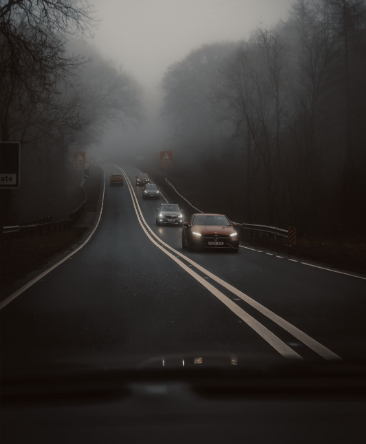
- Take action when encountering dazzling headlights
Being dazzled by oncoming headlights is one of the most unsettling parts of driving at night. Some headlights are more dazzling than others, too. Government-commissioned research by TRL found LED headlights, and those on larger vehicles, are considered extra problematic. It also found that older motorists and people with specific eye conditions are more sensitive to glare.
Sean offers a hack to handle the situation:
“Our instinct is to look straight at the lights, but that makes it worse – so instead, move your eyes towards the left edge of the road and follow the kerb or the white line until the car has passed. Ease off the accelerator rather than braking sharply and give your eyes a moment to adjust.
“It’s also worth keeping the inside of your windscreen clean because a greasy film scatters light and makes glare much worse.”
Glare can come from behind and shine straight into your mirrors, too. Busy rush hour traffic can see vehicles sit closer than you’d like. In fact, two in five riders (39%) say they’re OFTEN tailgated*.
Sean continues:
“If someone’s following you with bright lights, don’t speed up to get away. Drivers can switch the rear-view mirror to its night setting, while two-wheeler riders can angle their mirrors slightly out of the glare. Ease off gently and let them pass when it’s safe.”
- Plan a better-lit drive where possible
He explains that the quickest way home isn’t always the one you’ll feel most comfortable on once it’s dark:
“If part of your usual route takes you down unlit country lanes or back roads, navigate onto main roads with street lighting if you can – particularly if it only adds five or ten minutes to the journey.
“Better lighting means you can see junctions, road markings and other road users more clearly, and that takes a lot of the stress out of the drive if you’re nervous driving or riding in the dark. If you’re trying a new route, drive it in daylight first so you know what to expect when you do it after dark.”
- Keep a close eye on other road users
“Rush hour is the busiest time on the roads, and once the sun has set, everything gets harder to judge,” the motoring expert shares.
“Especially at junctions, roundabouts and tighter turns on the road, hazards are more difficult to spot, whether that’s pedestrians in dark clothing, wild animals, cyclists or motorbikes.
“It’s harder to judge distances in the dark, so leave a bigger gap to the car in front than you would in daylight and reduce your speed on roads you don’t know well. This will give you longer to react to hazards and will make the whole journey in the dark feel less stressful.”
Over a third (37%) of riders list riding at night as a safety concern.
Sean says: “The challenge with motorbikes, mopeds and scooters is that they commonly only have one visible headlight, when many motorists are used to seeing two on a car. That means it’s harder for drivers to recognise a rider’s distance and speed.
“If you’re driving, look out for these riders – checking your mirrors and blind spots before changing lanes in case they’re filtering between queues, which is legal.”
Lexham Insurance has developed a Rider Safety Index mapping out the safest areas in the UK for riders.

Leave a Reply