Continuing with my top ten cape and spandex free graphic novels. Part 1 can be found here if you haven’t already read it and rushed out to buy my recommended reads (which I know you have.)
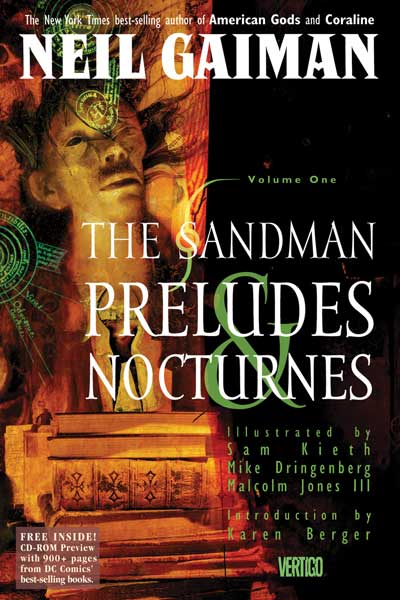
The Sandman by Neil Gaiman
Gaiman, and the calibre of his work, need no introduction, and I’m sure a lot of you have heard of, or even read, his masterwork, The Sandman. First published in 1989, the original comic series ran for 75 issues and it should come as no surprise that it is now collected into a number of graphic novels. The story follows the Lord of Dreams, or Dream as he is known for the most part, who is rebuilding his kingdom after being held in captivity for 70 years. Gaiman himself has summed the plot up as “The Lord of Dreams learns that one must change or die, and makes his decision,” which is far more succinct than I can manage. It is a story which is dense with mythology, both ancient and contemporary, and at times fashioned like a classical tragedy. It is by far the most intellectually stimulating of all the graphic novels I’ve read, and while it is maybe not as emotionally engaging as We3, for example, this award-winning series stands head and shoulders above its peers simply for the sheer skill and passion involved. Undoubtedly a must read and a testament to the power of a superb story within a visual medium.
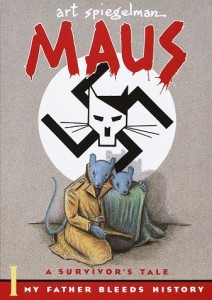 Maus by Art Spiegelman
Maus is the story of Spiegelman’s father, Vladek, and his life before, during and after, World War II, most notably, his time in Auschwitz. The depiction of Jews as mice and Nazis as cats creates a powerful, subconscious visual association with a primal hierarchy with which we are all familiar. The book takes the form of several interviews between Art and his father and between interviews, the Spiegelman’s contemporary life is depicted, which poignantly juxtaposes the realities of Vladek’s difficult personality with his suffering during the war. The artistic approach also highlights the meaninglessness of the Nazi’s policy of dividing nationalities upon religious or racial grounds, while suggesting that a variation of this illogical division is still present in society today. As such, Maus is the only graphic narrative to ever win the Pulitzer prize and is deeply multi-faceted, challenging not only the difficult subject of the Holocaust, but the veneration of concentration camp survivors and the very issue of recording history based on indirect research and not personal experience. The story and art are indivisible and an important social work is the result, not merely a story for entertainment’s sake.
 Wormwood: Gentleman Corpse by Ben Templesmith
The second time Templesmith appears on my list, but this time he both writes and draws the book. A mix of humour and horror, Wormwood is about a demi god worm who controls a human corpse by burrowing into the head. He then proceeds to save the world from various supernatural threats, all while being impeccably dressed (for a corpse.) It is both eerie and surreal, and while it doesn’t have the depth of meaning of other books on my list, it is undeniably entertaining, with original, engaging artwork. It’s a delight to look at and the dialogue is sharp and witty. The story is definitely macabre and grotesque and not everyone’s cup of tea, but it is laugh out loud funny in places and unlike anything else you’ll read.
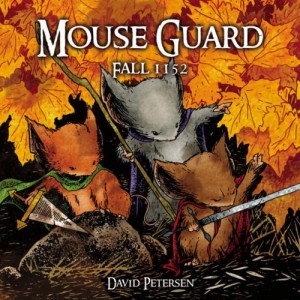 Mouse Guard by David Petersen
A second tale of sentient mice on the list, but this time very different. Set in the medieval era in a world without humans, Mouse Guard is a beautifully illustrated fantasy story about a group of mouse soldiers who protect their species against predators and various other threats. The mice are depicted as being both cutely adorable yet tough, which is a difficult and impressive mixture to create on the page. Petersen uses the art to tell the story rather than relying solely on the words and the result is a striking adventure tale. It is the use of colour and the creation of light in the panels that sets this award winning series apart. The colour palette is soft and perfectly captures difficult to render scenes like rain or a forest at dusk. Ostensibly for children, the story may strike adults as a bit sparse, throwing you into the world of the mice with very little in the way of back story, but that’s what makes this book so immersive. Part of the fun is figuring out things as you go along, much like the characters themselves do. For older readers there is a political subtext to enjoy but children will simply be thrilled by adventure.
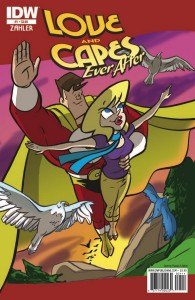 Love and Capes by Thomas Zahler
Okay, so I’m cheating a little bit with this one, but Zahler’s superhero sitcom isn’t about the saving-the-world side of a superhero’s life, but rather focuses on the domestic side. We follow Mark and Abby’s relationship, from beginnings to marriage and all that falls in between. It just so happens that Mark is a Superman-esque hero called Crusader. Essentially a romantic comedy, you might at first mistake it for a knock-off Lois and Clark storyline, but it is much more than that. Poking fun at the superhero genre with some easily identifiable homages to well-known heroes, Love and Capes visually has more in common with newspaper comic strips that the dynamic look of DC and Marvel titles. Any superheroics happen off panel and in a neat twist to the usual convention, that side of Mark’s life is treated as an unwelcome interruption from the main focus of his life. The comedy is at times broad and at others, subtle, but it is always witty, focusing on aspects of relationships and domesticity that we can all relate to. And while you can buy this in paperback form, the best part is that it is available to read online for free. How can you say no to that?
So, those are my ten recommendations for the superhero-phobic among you. Borrow or buy a few and give them a try, and be sure to let me know what you think.

Adore Neil Gaiman :D. Need to re buy it as some boy borrowed mine and kept it. Sob. Shall check out some of your other recommendations whilst there :D. X
So excited you mentioned Maus. I had to read this for a class in college and loved it. Wasn’t sure I’d ever hear it mentioned again! Nice to be proved wrong.
I read Maus after having been immersed in disposable superhero comics for a long time, so it completely blew me away with the depth and importance of the story. It’s definitely my top recommendation for people who dismiss graphic novels as being for kids.
I think it’s a given that Gaiman will always make it onto lists of this type. But I would say that We3 cannot be missed – definitely my favourite of all the books I recommended.