
Eyesight is something that most people are lucky enough to take for granted. But our eyes are truly incredible – and these are the facts to prove it.
1. The muscles in your eye are the most active in your whole body. And also the fastest…
2. It only takes 1/10th of a second for your eye to blink – the same time it takes a venus flytrap to catch an insect.
3. After the brain, the eye is the most complex organ, processing up to 36,000 pieces of information every hour.
4. The largest eye of an aquatic mammal is the blue whale – it’s about the size of a football!

5. Meanwhile the largest eye of a land mammal belongs to the horse.
6. And an ostrich has an eye even bigger than its brain.
7. While newborn babies make an awful lot of noise that sounds like crying, they’re actually unable to produce tears until they’re at least a month old.
8. Eyes are made up of around 7 million cone-shaped cells that help it see colour, and 100 million rod-shaped cells that are for seeing shapes.
9. On average your eye will blink about 8-12 times every minute. That’s 4-6 million times every year.
10. The most common eye colour in the world is brown.
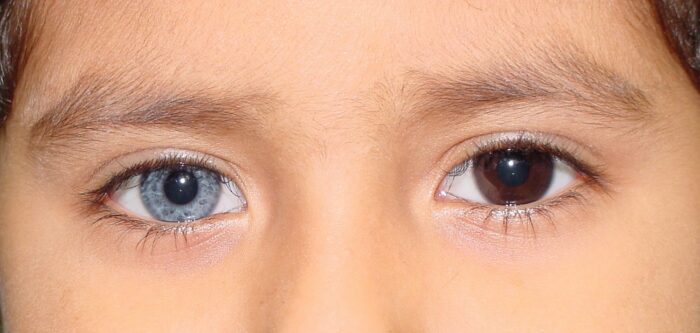
11. People with different coloured eyes are said to have heterochromia. Famous people with the condition include Alyson Hannigan, David Bowie and Alexander the Great.
12. It’s impossible to sneeze with your eyes open because your eyes and nose are linked to the same cranial nerves.
13. Can carrots help you see in the dark? A flashlight would help you more, but the beta-carotene found in the orange vegetable can be converted by the body into Vitamin A, which is vital for healthy vision.
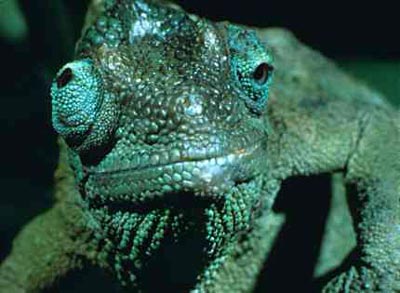
14. Chameleons are able to move each of their eyeballs independently, making it perfectly suited to catching flies and other insects with its tongue.
15. Meanwhile owls can’t move their eyes at all, which explains why they’re known for twisting their head.
16. Hamsters blink one eyelid at a time.
17. While camels can blink up to 6 eyelids at a time, because each eye has 3 eyelids –one of these closes and opens from side to side rather than up and down, and has developed to allowed camels to see in a sandstorm.
18. The majority of animals, including fish and insects don’t have eyelids at all.
19. Even when animals have eyelids sometimes they don’t use them – dolphins are known to sleep with only one eye closed at a time to help it evade predators.
20. Spiders famously have 8 legs, but they also have 8 eyes.
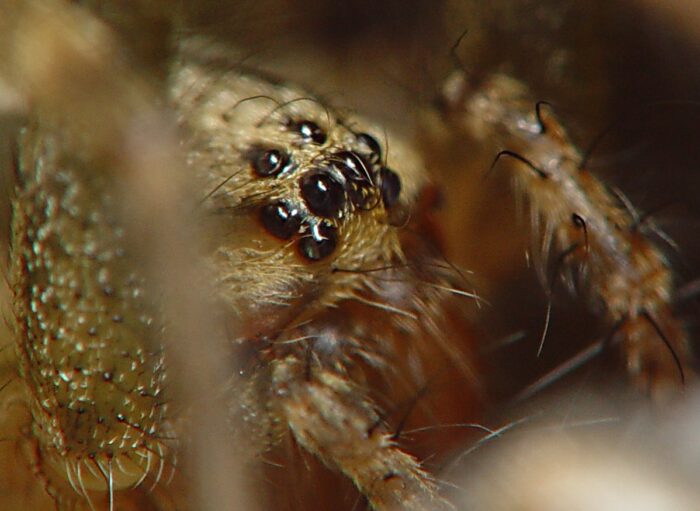
21. Meanwhile scorpions can have up to 12 eyes.
22. Still, that’s nothing compared to the box jellyfish, which has a whopping 24 eyes.
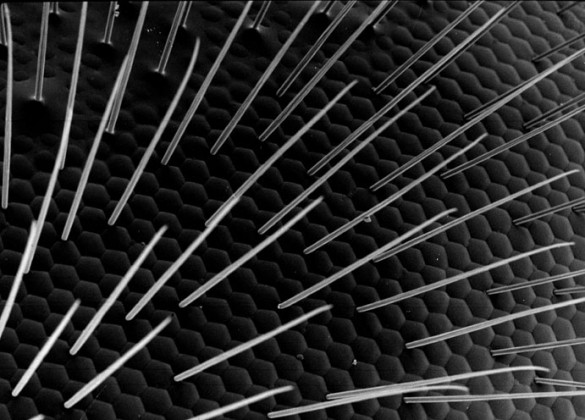
23. Bees have tiny little hairs on their eyes allowing them to transport even more pollen from flowers to their hive.
24. As our sight is so valuable it’s no wonder people have been coming up with ways to correct defective vision for centuries – the first wearable pair of glasses are thought to have been invented by the Italian Salvino D’Armate in 1284.
25. However, it wasn’t until 1929 that the first pair of sunglasses was created by American Sam Foster.
26. The idea for contact lenses meanwhile was first thought of by Leonardo da Vinci in 1508.
27. The German Eugene Adolph Fick created the first pair of wearable contact lenses in 1887 – they were made from glass, which severely limited their use and comfort.
28. The first soft contact lenses were developed in the 1970s and now account for around 90% of all contact lenses.
29. The idea for laser eye surgery was first established in 1896 in the Netherlands.
30. But it wasn’t until 1983 that someone vision was corrected using lasers.
Written by Matt Harris who works for Feel Good Contact Lenses, an online contact lens supplier stocking a wide range of leading brands. Visit them online at www.feelgoodcontacts.com
