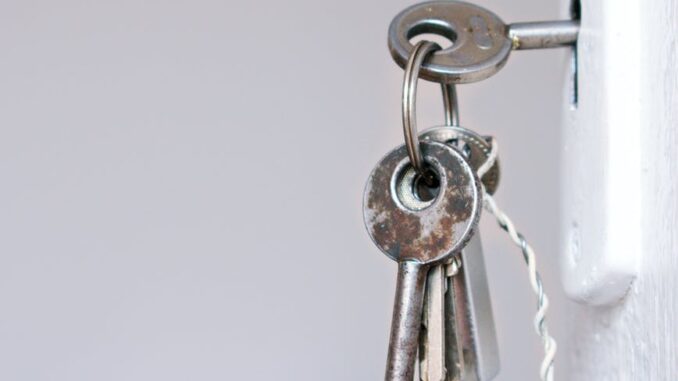
Over time your keys can weaken! Just like with anything it can suffer from wear and tear with the metal softening – and, this means, it’s susceptible to breaking. When you put your key in a lock and hear a crack, your key has almost certainly snapped off inside. This annoying event will happen at the most inconvenient time too.
But, first things first don’t panic! Your immediate reaction may be to call a locksmith, but you can save yourself time and money by using a few simple tools to get the key out yourself.
Well, it’s your lucky day as we’ve found 6 handy ways to get a broken key from a lock. Although, it’s important to note that each situation will be different, so, make sure you choose wisely and if you’re not confident in removing it yourself, then definitely pick up the phone and call a locksmith.
What You’ll Need:
Tweezers
Superglue
Pliers
Paper Clips
Hacksaw Blade
Broken key extractor
Before choosing your method, first, ask yourself some questions to properly assess the situation. How much time do you have available? What tools are readily available? How badly has the key been broken?
Avoid reinserting the other half of the key to try and turn the broken half. This can push the broken key into the lock further and damage the lock itself.
Another handy tip – before starting the extraction process, apply some sort of lubricant to the keyhole such as WD-40 to help fix the problem more quickly.
1. Tweezers
Tweezers are the first port of call when it comes to getting a broken key out of a lock. Most importantly watch out for the thickness of the tweezers, as if they’re the wrong thickness, the broken key could be pushed in the lock further. Ideally, your tweezers should be open wide enough to fit around the key but not so thick that they can’t fit along the sides.
If you can see part of the key sticking out from the lock, then you’ll have a great chance of retrieving it with tweezers. We’d recommend not to squeeze too hard on the tweezers as when the tweezers shut, it will push the key back very slightly. As a result, the key will be a little more difficult to remove after each failed attempt.
2. Super Glue
The Super Glue method should be the last attempt you try as the glue makes it extremely risky and could potentially damage your lock – so be careful!
It also only works if the broken key is protruding somewhat. To make this work you need to find a matchstick or something small and thin that can fit in the keyhole. Then, apply a single drop of superglue on the end of the object and carefully insert it into the lock, making sure not to touch the sides at all.
Hold the wire/matchstick against the key, and before pushing it in, add some glue but wait for it to dry and bind to the key. You should then be able to remove the object and pull out the key with it.
3. Tap the Cylinder
If you’ve broken your key in a bike lock or padlock then this method is the one for you as pointing the keyway down toward the ground is a necessity. While the lock is positioned downward, strike the lock on a solid surface or with a hammer and let gravity do its thing. The broken key should slip out with the lock remaining intact.
It may take several hits with a hammer or other blunt object before the key comes out. However, if you find you’re excessively hitting the lock with little to no results then stop and seek professional help.
4. Hacksaw Blade
Small jigsaw or hacksaw blades can work brilliantly as a key extractor. If the blade has angled serrations, it’s easy to push them into the top part of the keyhole – make sure the serrations are pointing back toward you!!
Push the blade far back enough into the lock and into a position where the serrations can hook onto the broken part of the key. When you feel the blades latch onto the key, gently give it a slight pull and twist, and then voila, the broken key should slide smoothly out.
One thing to remember is to not force the blade into the keyhole, it needs to fit smoothly. If you find you’re forcing it, make adjustments to the blade to make it thin enough to fit.
5. Paper Clips
Paper clips can be used in the same way as an extractor tool or hacksaw blade, or if you’re skilled enough, they can be used to probe and pull the key out.
Unfurl two paper clips to two thin lines of metal and line them around both sides of the broken key. Don’t put them too far into the lock, just enough so you can apply pressure. Then, ever so slowly pull the broken key towards you. Patience is the key here, as it may only move a bit at a time. Repeat the process until the key is fully out.
Alternatively, if you’re not succeeding, you can try turning your wrists inward while the paper clips are still in the keyway – twist and jiggle the broken key slightly which should make it fall out more easily.
6. Broken Key Extractor
And finally, the broken key extractor tool. This tool is what professional locksmiths use in these types of situations.
Although it might not be something you’ll have to use often, it can certainly come in handy at times of crisis. If you live close by to a hardware store, we’d recommend running out to get one as it’s both the easiest and safest way to remove a key.
Place the extractor tool inside the keyhole, along the bitting of the key. Then, try and hook the teeth on the key with the hooks of the extractor. When you feel it catch, turn and pull the key out in a smooth motion. It might take several attempts but it is by far the best method.
