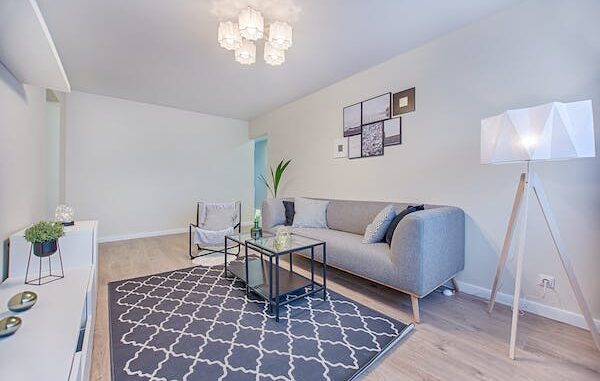
Lighting in the home can have a significant impact on mood, where too much artificial light can feel overbearing and oversaturated, too little light can make not only the room feel gloomy and dull, but also contribute to overall mood.
With colder temperatures and dark mornings still set to stay until March, it’s important to make sure rooms around the home have a good balance of artificial and natural light to help combat the winter blues.
With this in mind, Jade Oliver, Stylist at Express Bi-Folding Doors and Molly Woodward-Moor, interior designer and creative director at Stone Superstore share their expert tips on how to let more light into the home and illuminate any dark, dull rooms.
Strategic mirror placement
Reflective surfaces are one of the best additions to your home when looking for ways to bring more light into a room. The best positions for a mirror are opposite or directly next to the window so that light can reflect and enhance the sense of brightness.
This is something you do have to be careful with though, Jade warns “Choose one of two statement pieces, and combine them with light colours in the room so you get the effect you need, without it being too much”
Redesign your lighting setup
Letting more natural light into your rooms might not be feasible, but that doesn’t mean nothing can be done about rooms that feel perpetually dark and gloomy. “Take a step back and reevaluate your lighting set up” Jade suggests. “Make sure you’ve got one ‘main light’ on the ceiling, with more than one bulb – or spotlights, one or two side lamps for reading, low mood lighting for ambience, and scone lights above your bed in your bedroom for lower levels of light in the evening”.
Putting thought into your lighting design, especially in a darker room can make a huge difference, even without natural light. However, if you are missing the feel of natural light you can invest in a ‘daylight’ lamp, which emulates the feeling of natural light – a great product if you struggle to find the motivation to wake up in the dark mornings or find yourself suffering low moods in the colder months.
Harsh lighting can make your spaces feel cold
Overly bright, harsh overhead lighting or cool-toned bulbs could be creating a cold and clinical atmosphere in your home, particularly in areas like the kitchen. Kitchens are first and foremost functional spaces, where sufficient light is very important.
Molly comments that “It’s important to have plenty of functional lighting in such a practical space, that is equally distributed throughout. Instead of grids of direct overhead lighting, opt for a mix of pendants, wall lights and under-cabinet lighting to give you a balanced overall feel and a cosier atmosphere.
Switching out your bulbs for ones with a Kelvin scale of around 3000-4000K to ensure your kitchen has sufficient, practical lighting without feeling overwhelming. Dimmer switches are also a great addition within an open-plan kitchen, to give you full control by easily switching from functional to ambient moods when required.”
Make sure your windows are clean
This might seem like an obvious one, but this should be the first thing you think off when considering how to make your room feel brighter.
Jade advises “When you look at your windows, you might think they look clean, but upon further inspection, you’ll end up seeing there will be a layer of dirt, and even if it is just a bit, it will still affect the amount of light entering through your window”
Small windows especially, can get dirty much more quickly than you expect – and you should try to incorporate cleaning them into your regular cleaning routine rather than a ‘one-off’.
Consider how colour choices are affecting the light
Colour can make a huge difference on how bright or dark your room looks, it’s important to take this into consideration when decorating, alongside where your room faces in the home. Jade advises “North facing rooms will benefit more from strong and bold colours as the natural light can be quite cool, whilst south facing room will see dark colours look brighter due to the natural light being usually quite high in the sky”
Molly adds: “It’s often effective to introduce warm accents to balance out cool tones. Consider adding shades such as yellow, orange, brown or earthy greens to your space. You can do this through accessories, artwork or introducing natural wood and stones or ceramics into your space such as terracotta.”
Consider how your windows affect the space
If you’re struggling with darkness in your home and are looking for a bigger project or renovation – new windows can help, or even a roof lantern skylight might be a consideration to try get more natural light into the space by considering
If you’re looking for a slightly bigger project this year, Jade suggests looking into installing sliding or bi-folding doors. “If you have a bare, external facing wall, installing bi-folding or sliding doors is a great way of bringing the outdoors, indoors and is the best possible solution to allowing more natural light into your home”
For more advice on how to let more natural light into your home, please visit; https://www.expressbifolds.co.uk/news/bring-light-home/
