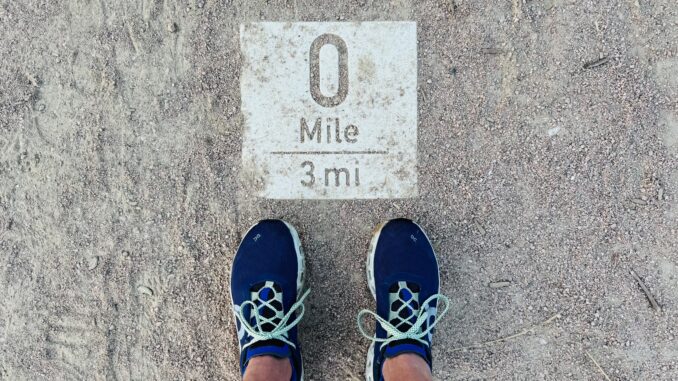
The British summer holiday is changing. While most Brits still head to the beach with a book and SPF 50, a rapidly growing number of fitness enthusiasts are lacing up their trainers the moment they land, and the data proves it.
Searches for ‘workout holidays’ have grown by 43% in the past year, reflecting how sports tourism is now one of the fastest-growing corners of the global travel industry, representing around 10% of worldwide tourism spend, according to the Sports Tourism Market Size, Share & Trends Report.
In a bid to uncover which European summer holiday destinations are becoming a mecca for runcations, British heritage running brand Ronhill has dug into the data. Using the latest ONS data to uncover the most popular holiday destinations for Brits, and AllTrails trail completion data for key tourism areas, the research shows Santorini is the most popular destination for a summer runcation.
Greece
| Running Route | Location | No. AllTrails Route Logs | AllTrails Rating |
| Imerovigli – Oia | Santorini | 1,266 | 4.8/5 |
| Fira – Imerovigli – Skaros Rock | Santorini | 679 | 4.7/5 |
| Mouzakia – Mavro Vouno Hill – Oia | Santorini | 257 | 4.6/5 |
France
| Running Route | Location | No. AllTrails Route Logs | AllTrails Rating |
| Coastal Path: Nice – Villefranche-sur-Mer | Côte d’Azur | 1,234 | 4.6/5 |
| Mont Boron – Mont Alban | Nice | 359 | 4.7/5 |
| Promenade des Anglais | Nice | 344 | 4.6/5 |
Spain
| Running Route | Location | No. AllTrails Route Logs | AllTrails Rating |
| Mount Tibidabo | Barcelona | 829 | 4.5/5 |
| La Merced Square – Gibralfaro | Málaga / Costa del Sol | 392 | 4.6/5 |
| Marbella – La Concepción Reservoir | Costa del Sol | 376 | 4.6/5 |
In Greece, Santorini’s iconic caldera path from Imerovigli to Oia draws the most runners: an 8.7km trail tracing the island’s clifftop edge, with the deep blue Aegean below and the white-domed village of Oia as the finish line. In France, the Coastal Path from Nice to Villefranche-sur-Mer is the standout holiday run, a 6.3km clifftop route hugging the Côte d’Azur coastline with the azure sea beside you the entire way. And finally, in Spain, runners are flocking to Barcelona’s scenic Mount Tibidabo, a 4.2km moderate trail climbing to the city’s highest point at 512 metres, with panoramic views stretching out to the Mediterranean. All three are very different runs, but are the kind of memorable running routes you’ll only find on holiday.
Running on holiday can be a different challenge to what people are used to back home in Britain, especially when summer temperatures can vary depending on where you’re visiting and when. To help runners make the most of their runcation training, Matt Bond, former GB distance runner and representative for Ronhill, has shared his top five expert tips for running outdoors safely and enjoyably in warmer weather:
1. Time it right: “When running on holiday, the sweet spot is early morning or after 7 pm. The NHS and Met Office both recommend avoiding 11 am to 3 pm, when UV levels and temperatures peak.”
2. Layer light, and let your kit do the work: “Materials matter more in the heat. Cotton and heavier synthetics trap heat and hold sweat against your skin. Wear lightweight, technical fabrics designed to wick moisture away from the body and let air circulate. Ronhill has a great guide for what to wear when running in summer, which is worth the read.”
3. Hydrate around the clock: “Hot-weather hydration isn’t something you start an hour before your run; it’s a 24-hour job. The UKHSA recommends drinking cold fluids throughout the day, even when you don’t feel thirsty. For any session over an hour, add electrolytes to help your body hold onto water and replace salts lost through sweat.”
4. Don’t skip the SPF: “UV levels stay high through cloud cover, and sunburn can develop in under 20 minutes on a bright day. Apply SPF 30 or higher to any exposed skin at least 20 minutes before heading out and choose a sweat-resistant formula that won’t run into your eyes. For runs over two hours, carry a small tube to reapply. It feels like a faff before a session, but a bad burn can put you out of training for days.”
5. Slow down and know the warning signs: “Heat makes your usual pace feel significantly harder, because your heart and skin are competing for blood flow to keep you cool. England Athletics suggests adjusting your training once temperatures rise above 25°C, slow your pace, shorten the distance, or split a long run into two shorter sessions. Most importantly, learn to recognise the warning signs of heat exhaustion: dizziness, chills, confusion or nausea. If you feel any of these, stop, find shade and hydrate.”
The sports tourism sector is projected to expand by 17.5% between 2023 and 2030, driven by rising participation in mass sporting events. And with 6.5 million people in the UK running regularly, there has never been a bigger audience of holiday runners looking for guidance on where to run, what to wear, and how to stay safe in the heat.
Photo by EnsearchofYou *: https://www.pexels.com/photo/runner-s-perspective-of-mile-marker-on-dusty-path-32237999/
