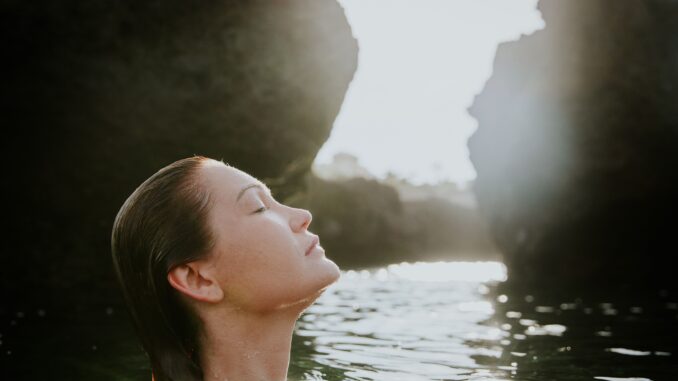
Britons are choosing staycations over holidays abroad in record numbers this summer, with current trends data even suggesting that for the first time, more of us are now planning to stay on home soil than take a flight for a vacation. At the same time, Google Trends data is showing water wellness could soon become a defining ritual of 2026 UK travel, with terms such as ‘wild swimming spots’ hitting an all-time search peak last summer, and search volume in 2026 for ‘cold plunge’ search volume quadrupling what it was in 2022. Combine this with a global wellness tourism market now set to be valued at more than $1 trillion, and you can see why water wellness has moved from niche to mainstream as a travel motivator.
For those Brits who are keen to explore what water-based wellness experiences have to offer but are sat on the fence about booking a flight because of potential cancellations or disruption, there’s good news. Some of Europe’s best water wellness destinations have a closer rival than you might think.
Why does water-based wellness actually work?
Licensed GP Dr Asimah Hanif, working with travel insurance specialist Staysure, has identified five water-based experiences with a strong evidence base for physical and mental health, and the benefits are more varied than you might expect.
Cold water immersion gives the body a jolt. Heart rate rises, circulation picks up, and the endorphin release that follows is part of why most people report a mood boost that lingers well after they’ve dried off. Thermal and geothermal bathing works in the opposite direction, using heat to ease tension in muscles and joints by increasing blood flow and reducing inflammation, making it particularly worth considering for anyone managing conditions like arthritis. Lake and river swimming offer gentle, low-impact aerobic exercise in a setting that research consistently links to reduced stress and clearer thinking. Surfing demands focus and balance in equal measure, and the level of presence it requires leaves little room for anything else, which is part of what makes it such an effective mental reset. And sauna contrast therapy, the Nordic ritual of moving between intense heat and cold water, has become one of the fastest-growing wellness practices in the UK for good reason. The cardiovascular benefits alone make a compelling case, before you even get to the mental afterglow.
“These experiences share something in common,” says Dr Hanif. “They get you out of your head and into your body. That might sound simple, but for a lot of people, that’s exactly what they need.”
“For travellers of all ages including those with pre-existing medical conditions many of these activities are low-impact enough to be genuinely suitable. However, it’s still important to check that your travel insurance covers any activities you plan to take part in, as well as any medical conditions you may have. Travellers should always declare all pre-existing conditions when taking out a policy to help ensure they are fully covered if they need medical treatment or need to make a claim while away.
Wherever you travel this summer whether you’re heading abroad or opting for a UK staycation make sure your travel insurance provides enough cancellation cover for the full cost of your trip per person. It’s worth checking your policy carefully, as many insurers allow you to tailor cover to suit your needs, helping to avoid being left out of pocket if you’re unexpectedly forced to cancel your holiday
Europe’s best water wellness destinations, and their UK alternatives
Not all water wellness experiences are the same. From surf breaks on the Atlantic coast to geothermal rivers in Iceland and sauna rituals on the Baltic Sea, each offers something distinct, and each has a UK equivalent that can deliver the same experience closer to home. To find the best of both, Staysure worked with Dr Asimah to assess twenty destinations across six criteria: water quality, accessibility from the UK, cultural heritage, water activity ‘infrastructure’, natural environment and preparation required for the visit. Destinations were drawn from Blue Flag certified sites, UNESCO-recognised cultural water heritage locations and clinical research into the health benefits of water-based activity. Here are the results.
- Zarautz, Basque Country, Spain: The hub for learning to surf
Zarautz sits on a wide, sandy bay on Spain’s Basque coast with reliable Atlantic swells and a well-established surf school scene that makes it one of the most accessible places in Europe to learn. The waves are consistent without being intimidating, and the town itself is relaxed and unpretentious. The city of San Sebastián is only 24km down the coast if you want somewhere to eat well and wind down after a session.
Surfing requires the kind of sustained physical and mental focus that makes it hard to think about much else. “It’s genuinely good for stress,” says Dr Hanif. “The combination of physical effort and having to read the water keeps your mind busy in a way that most exercise doesn’t.”
Closer to home: Widemouth Bay, Cornwall
Near Bude on the north Cornish coast, Widemouth Bay has consistent surf and good beginner infrastructure, with several established surf schools operating through the summer months. It’s a straightforward, no-frills option for anyone wanting to try surfing without travelling far.
- Lake Bled, Slovenia: For picturesque wild swimming
Lake Bled sits in the foothills of the Julian Alps, a glacial lake so clear you can see the bottom from the shore. It holds Blue Flag certification for water quality and has designated swimming areas with easy access. The setting is dramatic without requiring any real effort to reach, with only a short flight to Ljubljana and an hour’s drive needed to reach it.
Swimming in cold, still water at altitude has a measurably calming effect on the nervous system. Most people find it easier to switch off here than in a pool or at the coast, and the physical benefits of regular cold-water swimming, including improved circulation and reduced inflammation, build with consistency.
Closer to home: Ullswater, Cumbria
Ullswater is one of the Lake District’s quieter lakes, with clean water, a mountain backdrop and easy access from the shore at Glenridding. It offers much of what Lake Bled does without the flight. Go between June and September when water temperatures are most manageable.
- Basel, Switzerland: For urban river swimming
Every summer, thousands of Basel residents roll up their clothes in a waterproof bag called a Wickelfisch, wade into the Rhine and float downstream through the city. It is a genuinely social, unhurried ritual that breaks the mold of recreational swimming as most people know it. The river is clean, the current does the work, and the whole experience takes about 45 minutes.
River swimming can engage the body differently to pool or lake swimming, requiring constant small adjustments to current and conditions. “That kind of active, responsive movement is good for coordination and focus,” says Dr Hanif. “And there’s something about moving water that people consistently find more mentally restorative than still water.”
Closer to home: River Feshie, Cairngorms
The Feshie runs through one of Scotland’s most remote and scenic landscapes, with deep pools and clean, fast-moving water fed by highland snowmelt. Water quality in the Cairngorms is among the best in the UK. It is a wilder, more self-directed experience than Basel, so go with someone who knows the river and check conditions before you get in.
- Reykjadalur, Iceland: For geothermal bathing
Reykjadalur is a geothermally heated river in a steaming valley about 50 minutes from Reykjavik. You reach it on foot via a 3.5km trail, which makes the swim feels earned. The water temperature varies along the river, so you pick your spot accordingly. There are no facilities, no entry fees and very little crowding by mid-morning. Iceland’s geothermal bathing culture was added to UNESCO’s Intangible Cultural Heritage list in December 2025.
Heat therapy has long been associated with relief from joint pain and muscle tension. “Soaking in warm water increases circulation and reduces the kind of inflammation that causes stiffness,” says Dr Hanif. “For anyone with arthritis or a musculoskeletal condition, it is one of the most accessible forms of physical therapy there is.”
Closer to home: Thermae Bath Spa, Bath
Britain’s only natural thermal spa sits in the centre of Bath, fed by geothermal water that has been rising to the surface for thousands of years. The rooftop pool is the draw, and the water temperature hovers around 33 to 35 degrees year-round. It is a man-made infrastructure around a natural source, but the water itself is the real thing. It’s a warm outdoor pool overlooking Bath. It’s basically the modern version of the Roman bathing experience which was closed for public swim in the 70s but you can still walk around it and visit the museum.
- Löyly, Helsinki: For Sauna/cold water therapy
Löyly is a wood-fired sauna on the southern tip of Helsinki with direct access to theBaltic Sea. The ritual is simple: get hot, get cold, repeat. In Finland this is less a wellness trend than a way of life, and Löyly does it with minimal ceremony. You can stay for two hours, move between the sauna and the water as many times as you like, and leave feeling considerably better than when you arrived.
Contrast bathing, alternating between heat and cold, prompts a strong physiological response. “It gets the cardiovascular system working hard in a short space of time,” says Dr Hanif. “Regular practice has been linked to better sleep, reduced muscle tension and improved mood. It is one of the more evidence-backed wellness practices out there.”
Closer to home: The Saltwater Sauna, Sandbanks, Dorset
Run by a Finnish founder on the beach at Sandbanks, the Saltwater Sauna offers the same hot and cold contrast experience with direct sea access. There are now multiple Dorset locations including Lulworth Cove. Book in advance in summer as sessions sell out quickly.
